Wednesday, September 30, 2020

The Debate, Archangels, and Mr. Rogers

Over the course of the first eight weeks of the Fall semester at the University of Notre Dame, President Fr. John Jenkins, C.S.C. has issued two apologies to the school community. 

Both have centered around lapses in adhering to the strict COVID-19 restrictions in place for members of Notre Dame. In both cases, I could see myself or anyone making a similar mistake. 

The first apology occurred after stopping to take a selfie with a group of students on one of the quads. All were in masks. Social distancing, though, was not maintained. 

The second apology took place more recently and under the watchful eye of the nation. At the White House for the nomination of a Notre Dame faculty member to the United States Supreme Court, Fr. Jenkins attended the ceremony without a mask and without maintaining social distancing. Attendees were supposedly tested for COVID-19 and only allowed in after testing negative. The event was outdoors and wearing a mask was not mandated. Regardless, Fr. Jenkins felt compelled to send a note of apology to the Notre Dame community and take appropriate precautions after having been potentially exposed to the virus. 

I find these admissions of falling short of the expectations in place for the University to be powerful examples of leading with humility. 

I also find that a bit of humility from people in positions of leadership - and from all of us - could go a long way right now. 

Last night's Presidential Debate was appalling in many ways. One of the many things I find shocking about the fallout from those 90 minutes is how much flack moderator Chris Wallace has taken for the way that the debate spiraled out of control. Was it his fault that humility and grace were in short measure? Was it his fault that the two people poised to be the President of the United States of America interrupted each other incessantly? What other tactics did he have at his disposal outside of the many that he tried? In Mr. Wallace's defense, I do not believe there is another person alive that could have made the atmosphere even remotely civil. 

What we need right now as a country is more heart and less attack. What we need is a large dose of humility. 

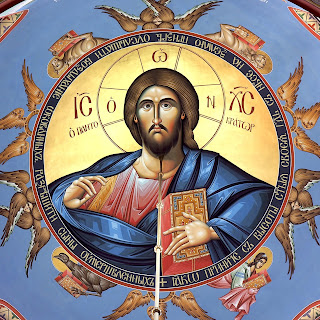
As I reflected on this idea, it was not lost on me that yesterday was the Feast of the Archangels, Sts. Michael, Gabriel and Raphael. These archangels are famous for defending, announcing, and healing, respectively. Their humility, in comparison to a fallen angel who's pride resulted in a rebellion against God, is worth imitating. 

Humility is a key ingredient in performing all three of these arch-angelic tasks. 

To defend, we must use our power not for ourselves, but for others. 

To announce, we must be willing to use our voice to proclaim the goodness of God and recognize that all good things come from Him - not us. 

To heal, we must acknowledge the hurt we have caused, and work toward making reparations. 

To round out this incredibly random post, in lieu of finishing the debate last night and instead putting it off until this morning to finish, my wife and I watched the documentary of Mr. Fred Rogers, "Won't You Be My Neighbor?" (2018). What an incredibly shocking contrast that Mr. Rogers was and still is, even posthumously, to the debacle debate last night. 

I was transported back to my 4-year old self as I watched clips of his shows and found myself mesmerized by his grace, his compassion, his intentionality, his humility, and his immense - albeit quiet and reserved - strength. To watch Mr. Rogers deliver testimony at a Senate hearing about funding public television was inspiring. To be reminded of the way that Mr. Rogers tackled issues of racism, death, loss, assassination, and tragedy was galvanizing. To hear the words that he uttered in a PSA after 9/11, "We all are called to be tikkun olam, repairers of creation. Thank you for whatever you do, wherever you are, to bring joy and light and hope and faith and pardon and love to your neighbor and to yourself" left me hoping and praying for our country and world.


Admit when you've done something wrong and hurt others. 

Defend truth and goodness. 

Announce that truth and goodness in others. 

Heal: repair the part of creation given to us to tend. 

Lead with humility.   

And, if it helps, think of these words from Mr. Rogers (or listen to it here: https://misterrogers.org/videos/what-to-you-do-with-the-mad-that-you-feel/), the next time you're mad:

What do you do with the mad that you feel, when you feel so mad you could bite?
When the whole wide world seems oh, so wrong...And nothing you do seems very right?
What do you do? Do you punch a bag? Do you pound some clay or some dough? 
Do you round up friends for a game of tag? Or see how fast you go? 
It's great to be able to stop when you've planned a thing that's wrong,
And be able to do something else instead and think this song:
I can stop when I want to
Can stop when I wish
I can stop, stop, stop any time.
And what a good feeling to feel like this
And know that the feeling is really mine.
Know that there's something deep inside
That helps us become what we can.
For a girl can be someday a woman
And a boy can be someday a man.

There's something deep inside of all of us that can help us all become what we can. 

May we have the humility to recognize it in ourselves and our neighbors. 


Thursday, September 17, 2020

We Are Stronger

This past January, I joined a men's basketball league through my church. Figuring that my window to do something like this shrinks with every passing day, and assuming that since I exercise with regularity I would be okay physically, I played. 

Before the first game I missed the chance to warm-up adequately or really even at all. "I'll be okay," I thought. 

And, throughout the game, I was. No injuries. No needing a sub out of exhaustion. No needing to sit out because I couldn't contribute. Playing the first game of semi-organized sports in over five years, I ended up playing a good amount of the game. 

I went home, stretched out, squeezed in a workout, got ready for bed and went to sleep. 

The next morning, however, I could barely walk. My calves burned. My thighs and hamstrings revolted and refused to bend much at all. I had to hold onto the railing of the stairwell at work. Well, actually I had to pull myself up by it to get up the stairs. Each step was a reminder of my age. 

It was also a reminder of the need to more adequately prepare.

It also made me realize that while I was in good or at least decent physical shape, I had fallen into the trap of working out to break a sweat. Over the course of time, I had stopped pushing myself. Seldom did I find myself out of breath while working out. Sore the day after a workout? Hardly, if ever. 

I had stopped pushing myself.

Throughout the course of the week after that first game, another realization hit me. For however old I was getting, my body started to heal. Even though it hurt, I could walk. By the end of the week, I was able to go for a run. 

My body was strong and it was made to get stronger in response to it being pushed to and beyond its limits.

The next week, despite being able to complete an appropriate warm-up, followed a similar progression. I made it through the game, albeit with game-time pain and soreness. Waking up the next morning, my legs once again resisted movement. 

I realized, however, that the pain didn't last as long. I was also inspired to work out with more fervor, pushing myself to exhaustion as a way to prep for the explosive nature of competitive basketball. 

The rest of the season brought about more typical day-after soreness, a strained groin, and a trip to urgent-care to get a gouge above my right eye repaired. 

Otherwise, with each game I could feel myself adapting more and more to the long-forgotten demands of competitive sports. I once again cherished the opportunity to push myself, whether in games or by myself in my basement, in my driveway, or out on a run. Out of breath. Exhausted. 

To, and over the edge of, my limits. All in. 

Two weeks before the end of the season, COVID-19 caused it to stop early. Despite this abrupt ending, the lessons gleaned from this experience have remained. 

So has the scar above my right eye. 

First, it is foolish to push beyond your limits if you haven't adequately prepared. Preparation is essential in all things. 

Excellence happens on purpose and as the result of intentional preparation. 

Second, it is equally foolish to not push to your limits and potentially past them if you have taken the time to get ready. While there might be reason to hold back at times, if you have put in the work, holding back prevents us and others from attaining the greatness for which we have been created and called and what the present moment needs. Ask the question. Make the statement. Stand up for your beliefs or get down on your knees for them. Or both. Offer the proposal. Sing with all that you have within you. Read with expression. Fire that pigskin. Take the risk. Go all in. We get out of something what we put into it. Focus on doing everything, even the small things like warming up, extraordinarily well. 

Excellence happens as the result of a whole bunch of hard work. 

And third, we are strong. Soreness - within reason - could be viewed as weakness leaving the body. We were made to function well under pressure and, when we prepare and push hard, we are capable of amazing things. Stress is your body's way of preparing you for the task ahead. You have more energy, you have more focus, you have an innate desire to connect with other people. We can see these effects of stress as negatives, or we can accept these responses as God's way of preparing us for the great works He has in store for us to do. 

Excellence happens because we were created to be excellent.  

2020 has been filled with countless pressure filled, stagnation inducing, painful events. More are most likely on the horizon. Sorry. 

Keep preparing as best you can. Push hard. Trust that you were created for greatness, built for holiness, and destined for sainthood. We are capable of so much more than what we think is possible. 

We can do hard things. Amazing things. Excellent things. 

Believe that perhaps we were put here for a time such as this (Esther 4:14). 

And, believe that for as hard as this time is, that we are stronger. 

Tuesday, September 15, 2020

The Divine Teacher - Divini Illius Magistri

Pope Pius XI wrote Divini Illius Magistri (translated as The Divine Teacher), an encyclical on Christian education, in 1929. Written between the two world wars and at the beginnings of modernity, the document tackles various topics about Catholic education. Pius XI states that the document aims to: "to summarize its main principles, throw full light on its important conclusions, and point out its practical applications" (#3).

To use a popular 21st Century approach to organizations, Sinek's Golden Circle, the document focuses on WHY Catholic education is needed and important, HOW to go about carrying out this mission, and WHAT Catholic schools produce in their students as they accomplish this mission.

WHY.

Anchored in Scripture, Pope Pius XI begins with the words of Jesus from Mark's Gospel (10:14), "Suffer the little children to come unto me" (#1). 

An encounter with Christ, who is the "way, the truth, and the life" (John 14:6) is an essential component of an education that is meant to "(prepare humans) for what (we) must be and for what (we) must do here below, in order to attain the sublime end for which (we were) created" (#7). 

Pius XI continues in paragraph 16 with more commands from our Divine Teacher, "All power is given to me in heaven and in earth. Going therefore teach ye all nations, baptizing them in the name of the Father, and of the Son, and of the Holy Ghost, teaching them to observe all things whatsoever I have commanded you, and behold I am with you all days, even to the consummation of the world" (Mt. 28:18-20). So as to fight against an elitist or insular mentality, Pius XI uses this same mandate from Jesus to remind us that Catholic education isn't just for Catholics or the wealthy or certain people. We are called to embrace "every nation" (#25) extending the Church's mission to educate "equally to those outside the Fold, seeing that all men (and women) are called to enter the kingdom of God and reach eternal salvation" (#26). 

Catholic schools form one of the many ministerial arms of the Church, helping to bring people to fullness of life through an encounter with Jesus Christ. Simply, the mission- Christ's mission - has a Church and schools...and hospitals and universities and shelters and countless other ministries all aimed at establishing the Kingdom of God here on earth while also advancing it in heaven. Pius XI positions Catholic education in step with Christ's mission for the salvation of all souls. 

In this way, Pius XI argues that our means - our HOW - must be as pure as this noble end.  

HOW. 

It is appropriate then, that Pius XI spends most of the document describing how Catholic schools are to execute Christ's commission to us all. Expertly explaining the interplay between the family, the state and the Church, Pius XI leans on natural law often in this text, clearly making the case that the child belongs first to the family, declaring, "existence does not come from the State, but from the parents" (#35). Parents and families, therefore, "are under a grave obligation to see to the religious and moral education of their children, as well as to their physical and civic training, as far as they can, and moreover to provide for their temporal well-being" (Codex of Canon Law, 1917, #1113).  

Pius XI cites the 1925 Supreme Court ruling in favor of the Sisters of the Society of the Holy Names of Jesus and Mary when they fought the state of Oregon against compulsory public school education. In a sense, this made possible many of the school choice options enjoyed across our country. 

Yet another reason to celebrate the heroic efforts of women, especially religious women. 

Parents and families turn to both the Church and the state for help with this education. The state, granted its authority from divine law, supports the common good (#42). The state then creates schools and other civic services to help members of society in all matters, including education. The Church, because of the authority She has rooted in divine law, is compelled to ensure that the family's rights are protected and that there are suitable means for the full education of its child(ren). 

And, everything is under the Church's maternal supervision: 

Therefore with full right the Church promotes letters, science, art in so far as necessary or helpful to Christian education, in addition to her work for the salvation of souls: founding and maintaining schools and institutions adapted to every branch of learning and degree of culture.[13] Nor may even physical culture, as it is called, be considered outside the range of her maternal supervision, for the reason that it also is a means which may help or harm Christian education. (#21)

Moreover, this synthesis of faith and reason leads to a synthesis of faith, culture, and life. This important approach to Catholic education will be carried throughout many subsequent documents. 

Combatting the rising tide of nationalism at the time, Pius XI demonstrates that good Christians make good citizens, posing that the Church has contributed to the world in myriad ways: arts, literature, science, education, government. Quoting St. Augustine, the Pope writes:

Let those who declare the teaching of Christ to be opposed to the welfare of the State, furnish us with an army of soldiers such as Christ says soldiers ought to be; let them give us subjects, husbands, wives, parents, children, masters, servants, kings, judges, taxpayers and tax gatherers who live up to the teachings of Christ; and then let them dare assert that Christian doctrine is harmful to the State. (#53)

At multiple points in this encyclical, Pius XI reminds us that grace elevates nature. 

In what might be considered an outdated fashion, Pius XI tackles sex education (#65 - 67) and co-education (#68). 

He also addresses the media - theaters, cinema, books, periodicals and radio! - and how we must safeguard children from being exposed to "the dangers to morals and religion that are often cunningly disguised" therein (#91). While we might once again consider this protection archaic, there is something to be said for keeping our kids sheltered from the rampant violence, sex, and overall disrespect found in the media until they are mature enough to navigate these waters successfully. Even Pius XI advocates for being in the world "forewarned and forearmed as Christians against the seductions and the errors of this world" (#92).  

Pius XI celebrates the important work of the teacher. In the teacher we should find the synthesis of faith, culture, and life. We should find the "bee, which takes the choicest part of the flower and leaves the rest" (#87) as the teacher brings students to fullness of life in Jesus Christ. Teachers will allow the school to accomplish its mission, "Perfect schools are the result not so much of good methods as of good teachers" (#88). 

WHAT. 

In closing, Pope Pius XI gives us a poetic description of the product of Catholic education: 

Hence the true Christian, product of Christian education, is the supernatural (person) who thinks, judges and acts constantly and consistently in accordance with right reason illumined by the supernatural light of the example and teaching of Christ; in other words, to use the current term, the true and finished (person) of character. (#96)

He continues, that this true Christian, this person of character, the product of Catholic education: 

(D)oes not renounce the activities of this life, (he/she) does not stunt (his/her) natural faculties; but (he/she) develops and perfects them, by coordinating them with the supernatural. (He/She) thus ennobles what is merely natural in life and secures for it new strength in the material and temporal order, no less then in the spiritual and eternal. (#98)

In other words, as we go about trying to accomplish our mission for the salvation of all souls, we will create outstanding Christians who use their intellect and their will to honor God by building up earthly society to make it more just, more humane, more loving, more patient, more beautiful, more of a reflection of the world our Divine Teacher intended it to be.

Tuesday, September 1, 2020

Amazing Grace and Us

"Amazing Grace and Chuck" was a 1987 film about a little league baseball pitcher, Chuck, who decides to stop playing baseball - his self-professed "best thing" - until the disarming of all nuclear weapons. What seems like a childish stunt or phase catches the attention of the nation when a fictional professional basketball player, "Amazing" Grace Smith of the Boston Celtics decides to join Chuck in sitting out of the season until the world is rid of nuclear weapons. 

The President visits the family, other professional athletes join in the cause, children around the world stop talking in protest, leaders from around the world join in the conversation and eventually, nuclear disarmament occurs around the world. 

The closing scene of the movie is Amazing Grace's response to a reporter's question about whether or not he thinks these protests are really going to bring an end to nuclear weapons: 

I don't know, but wouldn't it be nice.

The movie is a fantastical fairy tale - albeit one that reinforces racial stereotypes - but seeing it as a young child, it made me ponder the power of sports and the responsibility that all of us have to work toward a better world. 

All of us committed to a better world. Wouldn't it be nice. 

The NBA and other professional sports leagues sat out of their contests the for two days last week in an effort to draw attention to law enforcement's excessive use of force towards blacks, most recently the shooting of Jacob Blake. There were discussions among the NBA players and stakeholders about boycotting the rest of this COVID-affected season. As people everywhere - myself included - pondered the impact that a potential boycott could have, I was reminded of Amazing Grace and Chuck. 

Can sports really affect societal change? 

I don't know, but wouldn't it be nice.

Money talks and perhaps nothing talks as loudly across America, and potentially even the world, as multi-billion dollar sports leagues. How much would our country listen if sports weren't forced to cancel because of the threat and realities of a global pandemic but rather because of the choices of athletes to draw attention to the threat and realities of the evils of racism? 


There is something, even in the money driven worlds of professional and collegiate athletics, that is pure in sports. There is something about sports, when it is played at the highest levels of competition and with the purest of intentions, that draws us out of ourselves. Similar to the power of art, sports can remind us of the true, the good, and the beautiful. 

Sports can demonstrate to us the power of a group of people united in purpose. Sports can give us glimpses of what humans are capable of - amazing feats of strength, speed, agility, endurance, balance, explosiveness - when inspired to stretch beyond their known limits. 

Sports, when done right, can form us in the virtues of humility and courage, among others. Despite the many ways that athletes and coaches try to gain advantages over opponents within the confines of the rules of the game, sporting participants and their accomplishments are tarnished when they violate the spirit of the game (i.e. deflate-gate, stealing signs, steroids/PED/doping usage). 

Sports, when done right, can bring out the best in us. 

People have yearned for sports since their sudden stoppage in March because sports in their entertainment can act as a diversion. In the midst of the trials and tribulations of our lives, sports can draw us out of our circumstances, and elevate us - even if just for duration of the game - to something higher, something better.

In ancient Greek and Roman literature, sports acted as a recess from war. The Iliad spends countless pages detailing the funeral games held between the Trojans and the Greeks after the death of Patroclus. In the Aeneid, sporting events honor the memory of Aeneas's father. 

In modern times, sports can act as a universal language where groups of seemingly different people come together and compete alongside of and against each other. 

Sports, when properly directed, also pause at various times, like last week, to draw attention to more important matters. To grieve. To heal. 

Yes, there are more important matters than sports. 

Sports, like all facets of life, are impacted by the current trends in society and our world. But, sports also have the immense power to impact our society. When done right, sports can affect society and the world in positive ways.  

Can a two day stoppage of play reverse centuries old systems of racism? What about a season of protest? 

In a word: no. But, that wasn't necessarily the point.  

The solutions leading to a better world will require sustained hard work, innovation, forgiveness and hope.  Athletes will have an ongoing part to play, potentially with more missed games. Politicians are essential. So are police officers, and health care professionals and teachers and lawyers and engineers and construction workers and office personnel and priests and counselors and techies and business owners and actors and farmers and...

Everyone.

You. Me. Us. 

A better world won't come easily, or quickly, or through the actions of one person, or one law, or one movement. 

But when it does come, won't it be nice.


Wednesday, June 3, 2020

Rivers in the Wasteland

"See, I am doing something new! Now it springs forth, do you not perceive it? In the wilderness I make a way, in the wasteland, rivers" (Isaiah 43:19).

The last two months could adequately be described as a wasteland. The shuttering of our world, countless deaths, physical and social distancing and isolation, fear, anxiety, impatience, unemployment, confusion.

Add on the events that transpired across America last week and wasteland seems even more appropriate than before.

Everyone has been affected by the COVID-19 pandemic. Virtual graduations, delayed or private weddings, funeral-less deaths, on-line school, cancellation of athletic seasons, electronic church gatherings, the politicization of the responses to the outbreak, and countless eye-blurring and headache inducing Zoom meetings have rocked our entire world.

A wasteland.

Now, our country is reeling from yet another killing related to the forces of systemic racism that continue to murder, crush and destroy lives, dreams, hopes, communities and the very fabric of our society.

A centuries-long pandemic of racism heaped upon a months-long pandemic of illness.

Hope seems beyond anyone's and everyone's grasp.

Just before Easter, I came across a short reflection that pondered how the apostles, after the crucifixion of our Lord Jesus Christ, had locked themselves in a room and gathered together alone and afraid. They remained there for some time, and even after the Resurrection, their re-emergence from confinement was not immediate.

Hope must have been beyond even their grasp.

Christ broke through death, conquered it, crashed into their despair, erased it, and ushered in new life.

The disciples received the gift of the Holy Spirit, re-entered the world, and changed it.

When I first read that reflection, during the end of Holy Week and near the beginning of this quarantine, this idea gave me hope. We were huddled with those closest to us yet separated and distanced from the rest of the world. We were and still are afraid, confused and anxious. Our reality mirrored that of the apostles.

As I continue to reflect on coming out of isolation, especially in light of how even more broken and hurting our country is now than it was even just one week earlier, I trust that somehow, someway God is creating a river in this wasteland, a way in the wilderness. He is breaking through, crashing in, and creating something new.

That river is me. That new way is you. Together, we must be something new.

And together, we can and must change the world anew.    

Let's be rivers in this wasteland. Let's be ways in the wilderness. 

Let's be better together.  

This doesn't mean that being wellsprings of this new life will be easy. Rivers in the wasteland can easily run dry, become drained out, get polluted or even dammed (pun intended). Ways in the wilderness will necessitate tripping over roots, cleaning away overgrown brush, encountering wildlife and other dangers, and searching and wandering through darkness and without a clear way forward or end in sight. 

Simply: it will not be easy. Dismantling centuries old systems and structure of racism won't crumble without extreme efforts and a whole bunch of mess, rubble, and destruction. Tearing down our own biases and ingrained ways of perceiving and interacting with the world will won't happen without discomfort, regret, shame and reconciliation (go here and explore your own implicit associations: https://implicit.harvard.edu/implicit/takeatest.html).

Then, we must rebuild... 

But, we can and must do hard things, uncomfortable things, unpleasant things. We weren't made for comfort. We weren't created for an easy life. 

We - all of us - were made for great things, for goodness.

We can and must be better. 

Together. 

Friday, May 22, 2020

Together is Better

Dear ICS Class of 2020:

Congratulations on your graduation from Incarnation Catholic School! Some of you started at ICS ten years ago as students in our PreK-4 program. Your first year at ICS coincided with my first year ever as a principal and my first year at ICS.

So much has changed in the past three months, let alone the past three years since I served as your principal, or even the past ten since some of us entered ICS together for the first time.

I know that the end of your time at ICS was not how you would have written it. No one would have written this part of the narrative of the world. The stories of our lives often get written by authors other than ourselves. Some of you have probably already encountered this reality, and endured and overcome it multiple times over the course of your lives. For others, this pandemic may have been the first time that you experienced a loss of control over how your story goes. Undoubtedly and unfortunately, it will not be the last time. I do hope and pray, however, that it is by far the worst.

As sure as I am that you will face other hardship in life, I am equally sure that you responded to this situation and continue to face it with the grit, determination, grace and solidarity that are hallmarks of Incarnation.

Before I started as principal in July of 2010, I surveyed the teachers, families and some of the students about the best part of ICS. Almost unanimously, the community described ICS as a family. Throughout my time as your principal, this theme of family anchored and inspired my efforts. From establishing Households to hosting morning gatherings, First Friday Morning Assemblies, Mission:Mass sessions and grade level retreats, enhancing the ICS family fueled my leadership. Throughout my seven years, the ICS family demonstrated over and over for me that together is better.

As you celebrate your graduation, albeit in an unexpected way, I hope that this message resonates with you and serves as your anchor as you look ahead to an uncertain future.

Together is better.

Always.

We were created in the image and likeness of a Triune God - Father, Son, and Holy Spirit - and therefore we were built for relationships.

Together is better because there is strength in numbers. I'm sure the distance caused by the pandemic merely served as a way to bring you closer together as a class, as a school, and as an Incarnation community. Linking arms with others, even if just in virtual ways, can allow you to walk toward any obstacle with the bold confidence that you can and will conquer it. A lion will devour a lone individual walking toward it. Link arms with two others and that same beast will run away.

Together is better.

Together is better because when two or more are gathered in Christ's name, even on a computer screen, He is there in our midst (Matthew 18:20). When you join together with others in the name of Christ, you awaken and stoke into flame the Holy Spirit that always courses through your veins. The synergistic effect of a group of people committed to proclaiming the Good News of Jesus Christ can echo throughout the centuries. It can and indeed is the only thing that has ever changed the world.

Together is better.

In closing, I leave you with a paraphrased form of the charge issued to members of the class of 2020 by the President of the University of Notre Dame, Fr. John Jenkins, at Notre Dame's virtual graduation this past weekend:
My charge to you is simply this: Make this story, the story you may not have intended to write, a tale of resilience and hope, of friendship and solidarity, and of the kind of courage and persistence that conquers despair and disappointment. Make it, too, a story of generosity and goodness. Whatever your hardships, someone else is suffering much more. Be a sister or brother to them. In your family life, your professional life, and your spiritual life, every day of your life, never forget that your charge as (an Incarnation Catholic School) graduate is to be a force for good.
ICS Class of 2020, congratulations on your graduation!

Now, together, and in the face of whatever else life hurls at you, go be a force for good.

Go and change the world.

Goodbye, good luck, God bless and GO IRISH!


Monday, March 2, 2020

Greatness

As a Catholic school principal, I would often remind our students and teachers that they were created for greatness, built for holiness, and destined for sainthood.

Another version of this reminder took this form and tied in a root belief: you were created by God on purpose for excellence. 

I also leaned heavily upon a quote that I thought, until about a month ago, that Pope Emeritus Benedict XVI had said: “The world offers you comfort. But, you were not made for comfort. You were made for greatness.”

In preparation for a recent presentation, I searched for the exact language and styling. What I unearthed surprised me. 


He did, however, proclaim similar messages. From his 2005 address to the German pilgrims who came to Rome for his papal inauguration, Benedict XVI stated:
The ways of the Lord are not easy, but we were not created for an easy life, but for great things, for goodness.
Christ did not promise an easy life. 
Those who desire comforts have dialed the wrong number. Rather, He shows us the way to great things, the good, towards an authentic human life.
In a 2007 encyclical letter to the entire Church, Benedict XVI expounded upon this theme, explaining more about the greatness for which we were created:
Humans were created for greatness - for God himself; we were created to be filled by God. But our hearts are too small for the greatness to which they are destined. They must be stretched. (Spe Salvi, #33)
To me, these authentic statements made by Benedict XVI pose two nuances to the non-quote that I had previously repeated. 

First, Jesus Christ is the greatness we must receive, become, and offer to others. We were created so that we would become and act more and more like Christ. Greatness in this sense is explicitly and unequivocally synonymous with Christ. 

Second, this transformation, this becoming, this stretching requires more than just an absence or lack of comfort. It demands effort, struggle, pain, and even suffering and death.

So, even though he didn’t actually say those words, Benedict XVI probably agrees with the statement incorrectly attributed to him. We were made for Christ and this does not promise a life of comfort and ease. In fact, the Gospel and its message should affect and upset us so that we, in turn, can use the power of the Gospel, the greatness in us that is Christ Himself, to affect and upset the world (St. Pope Paul VI). 

Our purpose, our students’ purpose, our teachers’ purpose, the purpose of all the members of our school communities and of all people everywhere is to come to the fullness - or greatness - of life in Jesus Christ, and in doing so help others come to this greatness as well. 

This greatness dictates that we, like our God in whose image we were created, operate at the highest level of cognitive demand and pursue truth, goodness, and beauty, while developing every capability within us. 

This life in Christ insists that we recognize our “duty to exist for one another” (Consecrated Persons and Their Mission in Schools, #35). Our Triune God exists within the context of relationships; we, too, exist in the context of community. 

This fullness demands sacrifice, emptying, suffering, and dying. As disciples of Christ, our greatness lies in our willingness to lay down our lives, pick up our cross(es), and follow Him. We find ourselves and our greatness only in making ourselves, like our Savior did, a sincere gift to others.    

When we approach our work as Catholic school leaders with this frame, we come to see that our pursuit of greatness necessitates a pursuit of Christ. We come to understand that this pursuit requires struggle. We come to recognize how vital other people are in both our formation as well as the success of the mission of this ministry. 

As such, we purposefully embrace the both-and nature of this work. Struggle and greatness. Trials and joy. Exhaustion and energy. Confusion and learning. Reason and faith. Death and resurrection. Me and Christ. You and Christ. 

Everyone and Christ.

All of us are created for greatness, built for holiness, and destined for sainthood, and Christ doesn’t call us to this - to Himself - and then expect us to do it all by ourselves. He gave us Himself and each other. 

It won’t be easy and that’s okay; we can do hard things, great things, Christ-like things. 

Let’s get to work.