Wednesday, March 30, 2022

Identity

What does it mean to be Catholic? 

From a personal standpoint, does it require parishioner-ship at a Catholic Church? Reception of the Sacraments? Attendance at Mass on Sundays? Beliefs in the Trinity, Incarnation, Eucharist, and the Paschal Mystery? Performing spiritual and corporal works of mercy? Not eating meat on Fridays during Lent? Devotion to Mary? All of the above? Something else? 

What about from an organizational standpoint? What makes a group worthy of the title "Catholic"?

This forms the main topic of the Congregation for Catholic Education's (CCE) newest document, Instruction of the Congregation for Catholic Education, "The identity of the Catholic school for a culture of dialogue": "the need for a clearer awareness and consistency of the Catholic identity of the Church’s educational institutions all over the world" (CCE, 2022, #1). 

At a deeper level, the Congregation attempts to reignite the Church's raison d'ĂȘtre, or main purpose, for its educational ministry (#5). Representing "an essential part of her (the Church's) identity and mission" (#10), the Church's efforts in education stem from Christ's great commission, "Go, therefore, and make disciples of all nations, baptizing them in the name of the Father, and of the Son, and of the holy Spirit, teaching them to observe all that I have commanded you" (Mt. 28:19-20). 

Catholic schools have the blessings of both breadth and depth in regard to forming students into disciples of Christ. Not only do Catholic schools enjoy the gift of time with students, they also have countless avenues to synthesize faith, culture and life (CCE, 2022, #29). Some of our students attend Catholic schools 5 days a week for 13 years. Additionally, non-religious subjects such as math, language arts, history and science offer fertile soil to pursue truth, goodness, and beauty. 

This integral formation attempts to make pupils both smarter and better. Knowledge and values (#23). Reason and faith (#95). In Catholic schools, "reason enters into dialogue with faith, which also allows access to truths that transcend the mere data of the empirical and rational sciences, in order to open up to the whole of truth so as to respond to the deepest questions of the human soul that do not only concern immanent reality" (#20). 

These objectives of Catholic education must serve "the good of earthly society and the building of a world that is more human" (Second Vatican Council [SVC], 1965, #3; CCE, 2022, #13). Christ acts as the model, guide, and goal of Catholic education: "the principles of the Gospel in this manner become the education norms since the school then has them as its internal motivation and final goal" (Sacred Congregation for Catholic Education, 1977, #34; CCE, 2022, #20).  

Catholics' belief in the inherent dignity of all people demands that everyone has a universal right to education (SVC, 1965, #1). Because of this right, the Church has a responsibility to provide and make available to all an education that considers and honors human's religious dimension (CCE, 2022, #13). 

Mutual cooperation between and among families, educators, and students marks the operations of Catholic schools (#15). Educators play a key role in this work and their ministry in Catholic education necessitates permanent formation (#14), knowledge and promotion of Church teaching and theology (#47), and a "concrete pedagogy – based on bearing witness, knowledge and dialogue – is a starting point for personal, social and environmental change" (#34). 

Catholic educational organizations must also be appropriately vetted by the local bishop (#54 - 59). This oversight entails that the bishop and/or his delegates have familiarity with the particulars of Catholic schools and offers the appropriate support and guidance to live up to this honorable distinction. 

Instead of passing hard-fast rules and regulations that must be followed blindly, the Congregation seems to encourage "in essentials, unity; in doubtful matters, liberty; in all things, charity" (Pope John XXIII, 1959, Part III; CCE, 2022, #85). 

In a sense, this cadence suggests that deeming an organization as "Catholic" has less to do with an outside evaluation and more to do with an interior journey, effort, and ascent to autonomously claim and own this title as a part of one's identity. The Congregation states, "Even in the most serious conflicts, the unity of lived faith based on the Gospel remains the guiding compass. In this framework, doors are open to a true culture of dialogue" (CCE, 2022, #87).

"Compass Study" by Calsidyrose is marked with CC BY 2.0.

This metaphor of a compass resounds powerfully. 

We could see the principles outlined above as the checkpoints ushering us in the general direction of the "Catholic" designation-destination. Additionally, we could see our identities as Catholics - both individually and organizationally - as the compass. 

Just as Jesus never performed the same miracles in the same ways, there is no one way to be Catholic. The more that we strive to claim our own Catholic identities through "inclusive and permanent communication" (#87) and "profound discernment" (#90), the more that we will come to recognize Christ's personal invitation to each of us to move forward - in our uniquely messy and beautiful situations - in faith.       


References:

Congregation for Catholic Education. (2022, March 29). Instruction of the Congregation for Catholic Education, "The identity of the Catholic school for a culture of dialogue". https://press.vatican.va/content/salastampa/en/bollettino/pubblico/2022/03/29/220329c.html# 

Pope John XXIII. (1959, June 29). Ad Petri Cathedram. https://www.vatican.va/content/john-xxiii/en/encyclicals/documents/hf_j-xxiii_enc_29061959_ad-petri.html

Sacred Congregation for Catholic Education. (1977, March 19). The Catholic School. https://www.vatican.va/roman_curia/congregations/ccatheduc/documents/rc_con_ccatheduc_doc_19770319_catholic-school_en.html

Second Vatican Council. (1965, October 28). Gravissimum Educationis. https://www.vatican.va/archive/hist_councils/ii_vatican_council/documents/vat-ii_decl_19651028_gravissimum-educationis_en.html 


Monday, March 28, 2022

To the Heights

In his book, The Hope Quotient, Ray Johnston retells a story of an early 20th Century pilot's attempt to fly around the world (2014, p. 78). While refueling in a field before a four-hour flight over water, a rat climbed into the plane. About half-way through this leg of the trip, the pilot heard a "scratching, gnawing sound inside the plane" (Johnston, 2014, p. 78). 

An uninvited passenger was chewing on the plane's steering cable. 

Two hours from land in either direction, the pilot realized that rats weren't meant to fly. He began increasing the plane's altitude until the sound ceased. After safely landing on the other side of the ocean, the pilot opened up the plane's mechanical parts and threw out the dead rat. 

Johnston's point: the next time a rat - doubt, disappointment, despair, downtrodden-ness, doom, death, the devil - is gnawing at you, ascend to the heights. 

Discouragement drops; hope rises. 

Bl. Pier Giorgio Frassati expressed a similar sentiment through one of his most famous phrases: 

Verso l'alto.

Photo from: https://frassatiusa.org/verso-lalto  

Translation: "toward the top" or "to the heights".

Frassati embraced life and lived it fully throughout his 24 years on earth. An avid adventurer, Bl. Pier Giorgio climbed mountains, skied, road horses, and played countless sports. His joyful, loyal, humble, and grateful spirit infected friends and family alike and encouraged fellowship and faith sharing among them. As a committed Catholic, Frassati attended Mass daily, held a devotion to the Mother Mary and the Rosary, and performed innumerable works of mercy for those suffering from poverty and sickness.

Whereas Frassati never declared "verso l'alto" as a life-motto while alive, his life witnessed a constant pursuit of the best things - truth, goodness, beauty and life - for himself and others.   

In a world bent on deconstruction and tearing down, may we ascend to the heights focusing instead on "whatever is true, whatever is honorable, whatever is just, whatever is pure, whatever is lovely, whatever is gracious, if there is any excellence and if there is anything worthy of praise, think about these things" (Philippians 4:8). This doesn't mean ignoring injustice or denying the existence of darkness. Instead, it requires that we inject light and life into situations void of hope: God works in all things and "(h)ope would have us recognize that there is always a way out, that we can always redirect our steps, that we can always do something to solve our problems" (Pope Francis, 2015, #61).

To the heights.

In a time when society quickly cancels, turns failures into viral viruses, and dismisses dialogue and discourse, staying on the shore's safe sands and/or passively following the masses becomes attractive. Jesus calls us to "put out into the deep" - duc in altum - so that we can rise to the heights for which He created us. 

In relationship with Christ, may we courageously dance in the darkness and sing from the shadows. As we do, we can liberate others to do the same. When we do, the world may try to silence our song or disrupt the dance - "this is silly", "no one will join in", "it won't work", "it won't make a difference", "it's too hard", "who do you think you are?", "it's all about you". 

In these moments, remember Bl. Pier Giorgio's response to someone who told him that he sung out of tune, "But the important thing is to sing" (https://totheheights.com/2609/bl-pier-giorgio-frassati-quotes/).  

To the heights. 

For God. 

With others. 

In faith.

Forever. 

Verso l'alto! 


References:

Johnston, R. (2014). The Hope Quotient: Measure it. Raise it. You'll never be the same. W Publishing Group, an imprint of Thomas Nelson. 

Pope Francis. (2015, May 24). Laudato Si'. https://www.vatican.va/content/francesco/en/encyclicals/documents/papa-francesco_20150524_enciclica-laudato-si.html  


Saturday, March 26, 2022

Missionary Thrust

The days of Catholics automatically sending their children to Catholic schools have disappeared. Catholic leaders can no longer depend on baptismal records to adequately predict attendance at Catholic schools. Additionally, Catholic schools have scrambled to shift from a workforce composed of religious sisters to one dominated by the laity. Not only has this created challenges for Catholic schools to balance affordable tuition rates with needing to provide their employees with a just salary, competitive health care, and retirement benefits, it has also forced leaders to intentionally focus on enhancing the school’s Catholicity and its ongoing ability to accomplish its mission.   

Thankfully, in response to these trends, various roles within Catholic schools have evolved. Instead of focusing on development as raising money for the school, Catholic schools must now focus on advancement to include annual funds, capital projects, planned giving, alumni relations, communications, special events, and prospect research. Similarly, instead of considering admissions as merely approving or denying admission to students interested in the school, Catholic schools need enrollment management approaches that encompasses recruitment, marketing, financial aid, demographic research, admission, and retention. 

These evolutions acknowledge the increase in complexity in these efforts. They also transform the posture of the school from one of passive receptivity to one of active mission pursuit: 
And so, now as in the past, the Catholic school must be able to speak for itself effectively and convincingly. It is not merely a question of adaptation, but of missionary thrust, the fundamental duty to evangelize, to go towards men and women wherever they are, so that they may receive the gift of salvation. (Congregation for Catholic Education, 1997, #3)
Instead of a hierarchical model, these changes to advancement and enrollment management encourage a spirit of collaboration. By thinking innovatively about who to involve in aspects of this work like constructing and analyzing data, more members of the school community - data gurus, number crunchers, and/or people interested in behind the scenes work - can have a greater hand in advancing and accomplishing the school’s mission. Indeed, “(c)ommunion and mission are profoundly connected with each other…communion gives rise to mission and mission is accomplished in communion” (St. John Paul II, 1988, #32). 

"Pope John Paul II during the General Audience (790100)" by Belpaese.nl is marked with CC BY-NC-ND 2.0.

These stances also imply a belief that excellence happens on purpose. In order to adequately create a budget, systems must be established to ensure financial responsibility. In addition to faithfully following a budgeting calendar, schools must be realistic about increasing costs associated with health care, the net tuition revenue actually collected, and concerning enrollment trends such as the matriculation of a large class. All of these situations require strong administrative oversight as well as honesty and humility. A strong budgeting process will help to anticipate upcoming dips in revenue and potentially indicate the need for restructuring. 

Responding to these situations also necessitates innovation. Catholic school leaders should consider moving from step-in-lane pay scales to band range approaches to reward teachers for performance in addition to their years of service. Furthermore, Catholic school leaders should explore ways to transparently and simply communicate an employee’s total compensation package to include salary, benefits, and other amenities such as tuition remission, helping to pay for advanced degrees, or other school-based perks. Leaders should do something similar for tuition information, clearly outlining the true cost of educating a student. These purposeful practices not only ensure excellence, they also uphold the dignity of the school’s families, students, teachers and staff members.

As we faithfully forge forward in the ministry of Catholic education, may we continue to "(put) the person at the centre of education, in a framework of relationships that make up a living community, which is interdependent and bound to a common destiny" (Congregation for Catholic Education, 2017, #8). 

While this work requires that we evolve, collaborate, and innovate, it also requires that we hold fast to Christ's model of discipleship through relationship one individual encounter, moment, and person at a time.              


References:
Congregation for Catholic Education. (1997, December 28). The Catholic School on the Threshold of the Third Millennium. https://www.vatican.va/roman_curia/congregations/ccatheduc/documents/rc_con_ccatheduc_doc_27041998_school2000_en.html  

Congregation for Catholic Education. (2017, April 16). Educating to Fraternal Humanism - Building a "civilization of love" 50 years after Populorum Progressio. https://www.vatican.va/roman_curia/congregations/ccatheduc/documents/rc_con_ccatheduc_doc_20170416_educare-umanesimo-solidale_en.html 

Pope John Paul II. (1988, December 30). Christifideles Laici. 


Monday, February 21, 2022

And

My kids love the word and.

Can we have ice cream and candy? Can we stay up late and watch a movie? Can we go out to eat and get dessert? 


My five-year old son has a particular affinity for it. His imagination creates combinations of characters and settings and plot twists and props and dialogue and more plot twists to string playtime out for what seems like hours. “And then…and then…and then…” 


If I’m honest with myself, I love the word and too. 


And opens up possibilities. It creates connections between and among things, people, and places. 


The word and includes. It builds bridges. It invites. It imagines. It elevates. It increases. 


And acknowledges. It affirms. 


Put simply, within our ministries as transformational Catholic school leaders we need to strive for more ands and fewer buts, periods, eithers, neithers, or ors. 


I think this is especially true when it comes to our understanding of purpose. Organizationally, our shared purpose functions as our mission, the group’s main goal. Purpose serves as a key ingredient in a recipe for success. We also recognize purpose as a vital disposition of Catholic school leaders.


Purpose involves planning. Purpose requires intentionality. Purpose provides conviction. 


And, this isn’t necessarily enough. We need purpose and vision. We need purpose and persistence. We need purpose and pliability. When it comes to purpose, we need and.


In a study of what makes strong organizational cultures, John Kotter and James Heskett (1992) found that groups needed both a strong sense of purpose and a willingness to adapt. Having just one and not the other leads to either stubbornly refusing to evolve or aimlessly following the ever-changing winds of popular trends. 


Purpose and pliability allowed Catholic schools to shift from in-person to virtual learning practically overnight in March of 2020. Purpose and pliability enabled many Catholic schools to reopen and remain open throughout the majority of the past two school years.  


We did this because we needed to keep kids safe and we needed to preference in-person instruction. With purpose and pliability, we have found ways to continue with our ministries and compassionately acknowledge that the pandemic continues to affect our world, especially those suffering from poverty and/or vulnerability. 


With focus and flexibility, we innovate, invent, and inspire, discovering methods to more authentically combine relevance and orthodoxy, charity and justice, the mind and the heart, college/career readiness and heaven. 


Being purposeful and pliable liberates us to hold fast to the most essential aspects of who we are as individuals and institutions while simultaneously embracing opportunities to more fully become who we were created to be: changing the mascot; reimagining discipline to create disciples; recalibrating the standards and methods by which we assess our students, schools, and selves; pursuing radical inclusivity and aggressive collaboration; promoting participation through subsidiarity; and seeking new partnerships, funding strategies, and organizational models.


Purposeful and pliable. Intentional and innovative. Committed and called. 


This is the posture and work of a disciple with hope to bring, living with one foot firmly planted in the purpose of Jesus Christ and the other one raised, pliably ready to take the next step in faith to wherever He will lead. 


Reference:

Kotter, J. P., & Heskett, J. L. (1992). Corporate Culture and Performance. New York: Free Press.

Wednesday, February 16, 2022

Stewards of the Mission

Newsflash: "The National Catholic Educational Association said nationwide enrollment increased by 62,000 to about 1.68 million students, marking the first increase in two decades and the largest jump it has recorded in at least five decades" (Henao, 2022).

This spark of hope must inspire Catholic school leaders, teachers, families, students, and stakeholders everywhere to ensure that this trend continues. As stewards who stand on the shoulders of the apostles that came before us, we must tend to this growth and cultivate it. Like the stewards in the parable of the talents (Matthew 25:14-30), we need to take what we've been given, put it to use, and offer the Lord and our world a return on His investment.

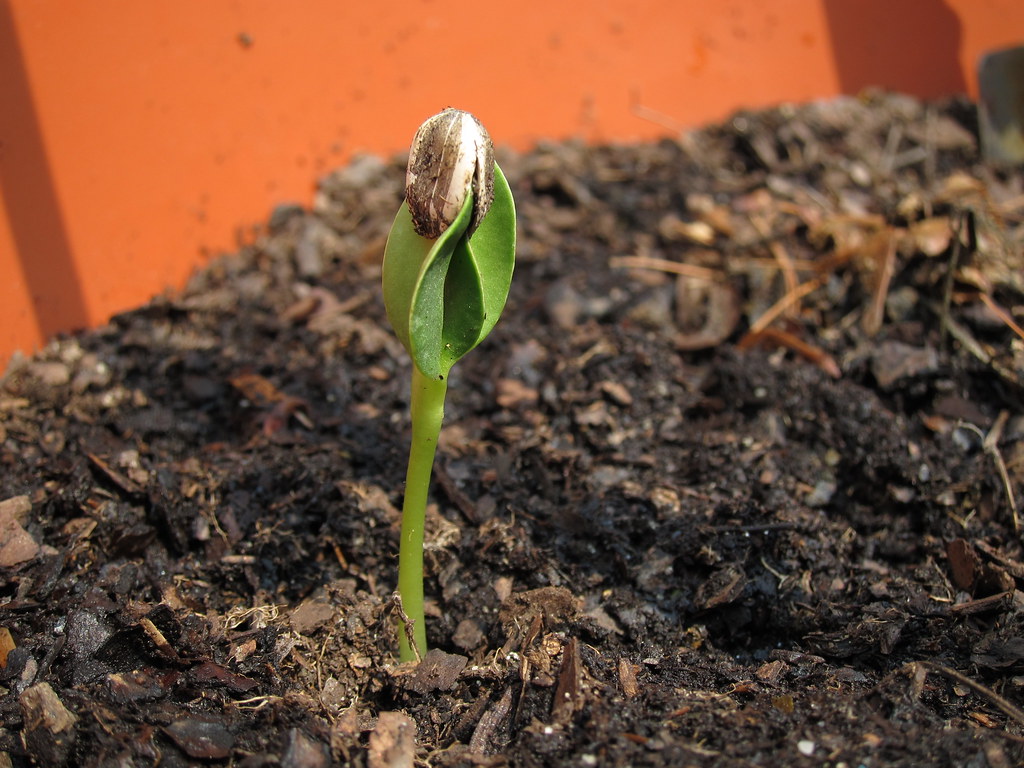
Sunflower Plant Shoot
"Sunflower Plant Shoot" by sameold2010 is licensed under CC BY 2.0

In order to turn this blip into a wave of evangelization and integral formation, we must (re)focus on our mission - Christ's mission.

“Thus, the (Catholic) school does not have a mission; the mission has schools” (Nuzzi and Hunt, 2012, p. 4). This quote should serve as an anchor for all that happens within Catholic schools, helping those who minister there understand they advance the work of Jesus. 

When our mission in Catholic schools aligns with the salvific mission of Christ, every decision - whether focused on academics, extracurricular activities, admissions, budgeting and/or funding - should be filtered through the lens of whether or not a particular action advances Christ’s mandate to “(g)o, therefore, and make disciples of all nations, baptizing them in the name of the Father, and of the Son, and of the Holy Spirit” (Matthew 28:19). 

Ensuring that all members of a Catholic school’s personnel, including its business officers, understand and actively support the school’s true purpose is essential to its operations. Having clarity of mission from a financial perspective allows for innovative approaches to tuition models, sharing resources such as counselors and fine and performing arts teachers across schools, centralizing purchasing, and seeking business partnerships and funding strategies. As Catholic schools strive to offer even stronger academic and faith-based programming, compensate teachers and staff members more competitively, update facilities and technology, and also keep tuition from prohibiting families from choosing Catholic education for their children, business personnel who are committed to Christ’s mission and inspired by the Holy Spirit will find ways to creatively sustain and enhance our schools.

These Holy Spirit-infused entrepreneurs need to help our schools and Church tend this enrollment growth - concentrated mostly in Kindergarten and PreK - so that it can blossom for years to come.   

This mission-minded approach is the heart of stewardship. Church personnel such as clerics, parish and diocesan staff, and parishioners of Catholic churches need to see Catholic schools as treasures of the Church worthy of cultivation, celebration, and commitment. 

More fully recognizing Catholic schools as an integral arm of the mission of the Catholic Church could bolster financial support from parishes and dioceses to Catholic schools. Instead of subsidies, these monies could be seen as investments in the future of our Church, and the building up of the Kingdom of God on earth. 

Stewarding our Catholic schools, and in turn the mission of Christ, also demands appropriate checks and balances to responsibly use the resources entrusted to us. Catholic school leaders play an important role in partnering with business officers toward this end. While Catholic school leaders do not need to be an expert in financial matters, they need to actively participate in overseeing the finances of the school. From checking the payroll of the school periodically to looking at balance sheets and profit and loss statements at least quarterly to empowering a team of people to know how to perform various business related tasks, the school leader must assist the business officer in the school’s stewardship efforts to “(receive) God’s gifts gratefully, (cherish) and tend them in a responsible and accountable manner, (share) them in justice and love with others, and (return) them with increase to the Lord” (USCCB, 2002, p. 9).

A seed has been planted, has taken root, and is starting to burst forth from the soil into the light of day.

May our efforts to steward the mission of Christ allow this new life to blossom and produce a bountiful, wonderful, and beautiful harvest for today, tomorrow, and into eternity.


References:

Henao, L. A. (2022, February 14). Enrollment in US Catholic schools rebounds after sharp drop. AP NEWS. Retrieved February 16, 2022, from https://apnews.com/article/coronavirus-pandemic-health-religion-education-united-states-8bea1bef885e2d4180a2f5dca5110c9a  

Nuzzi, R., & Hunt, T. (Eds). (2012). At the Heart of the Church: Selected documents of Catholic education. Notre Dame, IN: Alliance for Catholic Education Press.

United States Conference of Catholic Bishops. (2002). Stewardship: A Disciple’s Response: A pastoral letter on stewardship (10th anniversary ed.).

Wednesday, February 9, 2022

Speak Life

Words carry power. 

I could have written that sentence in the following way: "Words are important." Whereas this conveys a similar message, the English teacher in me would offer two critiques. One, use the active instead of the passive voice. Two, why do words have importance? Use the answer to that question as a substitute for important. 

Words carry power. 

Therefore, speak life. Write hope. Script love. Construct joy. Convey truth. Message compassion. Inscribe empathy. 

God spoke the world into existence (Genesis 1). Jesus's words healed, forgave, transformed, and resurrected. John's Gospel refers to Jesus Himself as the Word that brought forth all things (John 1:1-5). 

God made us in His image and likeness. Therefore, our words also create. They create life, hope, love, joy, truth, compassion, and empathy. 

They also, unfortunately, create "unchastity, theft, murder, adultery, greed, malice, deceit, licentiousness, envy, blasphemy, arrogance, folly" (Mark 7:21-22). 

Words carry the power to create or destroy, to heal or hurt, to educate or fool, to love or hate. The stories that we tell ourselves and others, the ones that we listen to and repeat create our world. 

Think about the words you proclaimed to yourself the last time you made a mistake. 

"I'm so stupid/lazy/forgetful/bad," or "I'll never be able to do it" works on us and our world so much differently than something like, "I know what not to do now," or "I'll get it right next time when I try it this way," or "I can do hard things" or "I just can't do it yet."

Levi Lusko, founder and lead pastor of a Christian church in Montana, encourages us to be our own best coaches and cheerleaders as opposed to our own worst critics. 

Speak life to yourself because words carry power. 

God also calls us to speak life into the lives of others. St. Paul exhorts us, "Finally, brothers (and sisters), whatever is true, whatever is honorable, whatever is just, whatever is pure, whatever is lovely, whatever is gracious, if there is any excellence and if there is anything worthy of praise, think about these things" (Philippians 4:8). 

In a world bent on cancelling, destroying, and defeating, figure out ways to build others up (1 Thessalonians 5:11).  

"In the time of your life, live — so that in that good time there shall be no ugliness or death for yourself or for any life your life touches. Seek goodness everywhere, and when it is found, bring it out of its hiding-place and let it be free and unashamed" (Sayoran, 1939).

Words carry power. 

As such, and in any and every way possible, speak life - bringing the good, pure, noble, just, lovely, joyful out from its hiding place into existence. 

Speak life. 

To yourself. 

To others. 

And to the world, the one which we can create with our words.

Thursday, February 3, 2022

Unified Not Uniform

Over the past few weeks, I have had the blessing to speak with transformational Catholic school leaders from across our country about their ministries in Catholic schools. Their individual and collective commitment to the mission of Catholic education inspires me and breathes hope into my ministry to form more of these types of transformational leaders for our Catholic schools. 

It strikes me that while similarities exist across these leaders and their specific school contexts, all of these leaders lead in uniquely specific ways and contexts. 

Considering their efforts as part of the saving mission of Christ, these leaders are unified not uniform. 

Uniform means one form. Unified means that we come with our individual identities and bring them into coordination with others' uniqueness. 

St. Paul writes powerfully about the unification of the many members into the one Body of Christ in his first letter to the Corinthians:

Now you are Christ’s body, and individually parts of it. Some people God has designated in the church to be, first, apostles; second, prophets; third, teachers; then, mighty deeds; then, gifts of healing, assistance, administration, and varieties of tongues. (1 Corinthians 12:27-28)

St. John Paul II affirms this: 

The unity of the Church is not uniformity, but an organic blending of legitimate diversities. It is the reality of many members joined in a single body, the one Body of Christ (cf. 1 Cor 12:12). (2001, #46)

In this way, Catholic schools should consider embracing, enhancing, and celebrating their unique contexts, communities, and charisms. 

For example, two of the school leaders interviewed, Dr. Martine Romero and Mrs. Jessica Patterson, minister at St. Madeleine Sophie Catholic School in Bellevue, WA. Their school community courageously and joyfully embraces a radically inclusive approach to education, allowing for students who may have historically been denied acceptance into Catholic schools - a compelling argument against the Catholic school effect - to participate in a general Catholic education program. And, while their ministry hopefully inspires more school leaders and communities to adopt a similar approach, taking the St. Madeleine tactics off of a shelf and applying them to another school community would be foolish. 

It would be similar to putting a foosball table in the faculty lounge and expecting morale to increase. This may be a signature aspect of another organization's culture but that doesn't mean it will transfer to your unique community. 

Instead, a key takeaway from time spent with another leader and/or community should invite broader and more thematic reflections. For this experience with St. Madeleine Sophie, we should consider questions like these: 

  • South Tapestry, Cathedral of Our Lady of the Angels
    One of the south tapestries, Cathedral of Our Lady of the Angels
    How does my school welcome and embrace students and families? 
  • What obstacles stand in the way of students accessing my school and/or flourishing there? 
  • In what ways is my school community called to be more radically inclusive by breaking down barriers like finances, prior academic performance and behavior, background, and faith? 
  • How might my school shift from inclusivity to belonging, emphasizing the ideals of solidarity, ubuntu - I am because we are, participation, and subsidiarity. 
As we do this, as we celebrate the many and varied ways that each Catholic school community is united in Christ yet diversified in its local ministry, we live out our true Catholicity - aligned to the Church established by Christ - and catholicity - spreading throughout the whole. 

Our ministry and our world don't need another St. Madeleine Sophie Catholic School, despite the amazing work of that entire school community. What we need is for each of our school communities to so what St. Madeleine Sophie Catholic School has done: recognize, embrace, enhance, and celebrate its local contexts, its specific communities, and its unique charisms.

As St. Catherine of Siena stated, "Be who God meant you to be and you will set the whole world on fire." 

If we do this on both the individual and communal levels, becoming the best versions of ourselves so that our Catholic schools can become the best versions of themselves, uniting the various gifts of teachers within a school while also uniting the particular gifts across Catholic school communities, we can and will set the world on fire. 

If we do this, Catholic schools, unified with each other and Christ, can and will change the world.    


Reference: