Friday, December 9, 2022

Rest

“Come to me, all you who labor and are burdened, and I will give you rest. Take my yoke upon you and learn from me, for I am meek and humble of heart; and you will find rest for yourselves. For my yoke is easy, and my burden light."

-Matthew 11:28-30

Rest. Easy. Light. 

Most of us, myself included, feel tired, burdened, and heavy. 

Whereas I know that I have so many ways in which I can grow in my relationship with Christ, I consider myself one of His disciples. 

But, this rest of which Christ speaks? This ease? This light?

I have so much I still need to learn, and so much growth that still needs to occur.

Ancora imparo...

About 7 years ago, in my sixth year as a principal, I adopted a motto at the beginning of the school year that I hoped would motivate my efforts at the school: all in. I would be all in for Incarnation Catholic School. If we needed a sub, I would step in. A duty to cover? All in. School representation on a committee? Count me in. 

I foolishly thought that the way that I could help push the school to new levels of excellence was through more of me. 

I lasted about 6 weeks before I burnt out. 

Tired. Burdened. Heavy. 

Frustrated and confused, I argued with God, "Why won't you help me carry this? I've poured my entire self into this ministry. Why won't you bless this?"

He replied, "Take my yoke upon you." 

I responded, "I have a yoke, why won't you just help me with mine?"

Christ repeated, "Take my yoke upon you." 

"I don't want that one, I have this one! Help me!" I cried out. 

"That's not for you. Take mine," He lovingly encouraged.

Pridefully, my grip tightened and I turned away.

"Take me. I never asked you to be all in for this school. I need you to be all in for me."
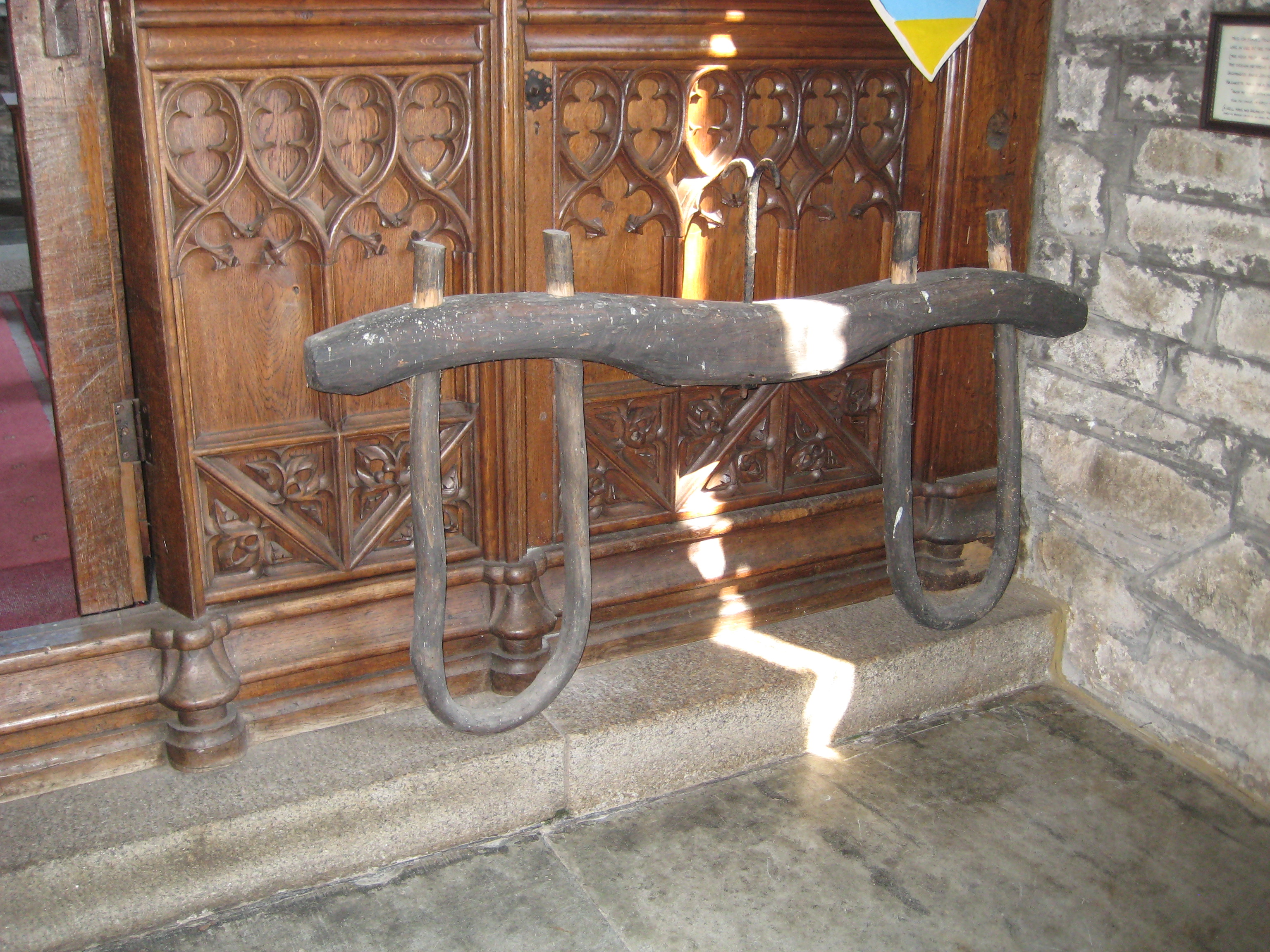
(https://upload.wikimedia.org/wikipedia/commons/a/a9/Wooden_ox_yoke_at_St_Kew_church.jpg)

It was in this moment that I recognized, through the wise counsel of a trusted friend, that I had idolized my ministry. Instead of putting Christ above all else, I put my work as a Catholic school principal ahead of my relationship with Him as well as my primary vocation to my wife and kids. 

Tears streamed down my face. Grateful for this newfound clarity, I begged for the next steps. I was used to my yoke, and for however much I couldn't handle it, it had become comfortable. I didn't know another way. 

"Be all in for Me," Christ commanded. "If that entails, which at times it will, that you devote time and energy and expend yourself for this school, then do it. But, do it for Me. Be all in for Me."

Humbly, I consented. Relieved, I experienced a lightness and ease I hadn't experienced in quite some time. The Sacrament of Reconciliation offered healing, a new beginning, and efficacious grace.  

As a result, my mind raced for ways that I needed to preference my relationship with Jesus and in turn my wife and children. Your vocation is as a husband and father; therefore, stop working in the evenings so that you can be more present to your family. Keep holy the sabbath: stop working all day on Sunday and devote time for your faith and your family. Tithe: give your time, talent, and treasure to your God, and let Him allocate it to your ministry and elsewhere. Recommit to the Eucharist, Reconciliation, and other distinctly Catholic practices, including the Rosary. Bring others into a deeper relationship with Christ through your interactions and your position as a principal. 

Incarnation Catholic School didn't need more of me. Clearly. It needed more of Christ.  

And, much like how Christ gave the beloved disciple - and in turn His Church - His Mother to guide us, protect us, and to bring us into a deeper relationship with her Son, Mother Mary came to me during this same season of my life to help ensure I didn't go running back to my old yoke and so that I could - finally - experience rest... 

Thursday, December 8, 2022

It Is Well

Today marks the 10-year anniversary of my father's sudden passing into eternal life. Unexpected and somewhat mysterious, his death shook me like no other event in my life ever had.

I can't believe he has been gone for 10 years. I have so much that I wish that I could say to him, so much that I wish that I would have done, so many regrets, missed opportunities, and mistakes...

Yet, despite the deep and lasting hole left by my father's passing, I have come to an even deeper understanding of and appreciation for life, my family, and most importantly, my faith. 

It is not, in any way, what I would have chosen. Yet, because of Christ, it is well.   

A few years after his passing, I stumbled across this rendition of the song "It Is Well With My Soul". I knew it as a traditional Christian hymn, yet for as many times as I had heard or even sung it, I never knew its inception. It's incredible to me that in the midst of such tragedy, someone could be so secure in the Lord. 

Horatio Spafford composed the lyrics in the wake of a series of tragic events in his life. He and his wife lost their son to Scarlet Fever in 1870. The Great Chicago Fire of 1871 ruined him financially. Then, he lost his other four children out at sea on a voyage that he was initially supposed to also be on. He learned of their passing from his wife, Anna, who survived the shipwreck and sent Horatio this telegram, "Saved alone. What shall I do?" It was during his journey to reunite with his wife that Spafford wrote the words of this hymn.

Around the same time as my discovery of the origins of the song above, I also heard the testimony of Angie Smith. She retold the story of the birth and death (within two hours of each other) of her daughter Audrey. Her story and her message cut right to my core and I found myself in tears. 

Angie recounted the importance of meeting Jesus in the deep waters of His love as opposed to the safety of the sands on the shore. In her deepest, darkest moments, Angie cried out to Jesus for Him to walk with her, hold her and carry her through these times. 

Jesus, she says, is in the deep. It is only there that we can come to know Him. As you may be able to assume, Angie and her husband, Todd Smith (lead singer of the Christian band, Selah), were advised to abort Audrey as she was incompatible with life. Even if Audrey was able to make it full-term, she would not survive delivery or much beyond. 

Angie and Todd put out into the deep and carried Audrey the full length of the pregnancy. Audrey only lived two hours and the pain surrounding this tragic event shook Angie and Todd and forced them to latch onto the Lord as they had never done before. Todd and Angie had the courage to tell Audrey, "We will carry you," even though her death was imminent and their grief unavoidable. Jesus, in response, had the love to "carry them" through the most difficult thing that anyone could endure - death.

Jesus is not on the shore. He is in the beautiful, powerful, dangerous waters of the deep. When we find ourselves outside of our comfort zones, afraid, hurt, alone, where our feet can't touch the bottom, Jesus is there. He lives in the deep. We can't fall in love with Him on the seashore, because He's not there. We have to move away from what's safe to truly see, meet, and love Jesus. 

By no means does this mean you seek out pain and hurt and despair. Instead, it is an invitation to face life's storms when they come - because they will - with the confidence and courage that we have a Savior who carries us through them all. 

Continue to venture into the deep. It's where, if you're open to it, you can encounter God.

It's where, because of Him, it is well.

Friday, December 2, 2022

It's Not a Career, It's a Calling

Fr. Pedro Ribadeneira, a Jesuit priest, declared to King Phillip II of Spain, "All the well-being of Christianity and of the whole world depends upon the proper education of youth" (O'Malley, 1993, p. 209). I believe that God has called me to strengthen, sustain, and transform Catholic schools to advance Christ’s mission for the Church and upon which the “whole world depends.”  

I believe that God has called me to learn how to make the work of Catholic education and leadership more sustainable, while also discovering ways for our Catholic schools to flourish in their earthly and heavenly goals. 

I believe that God has called me to discover ways in which we can remove boundaries that prevent access to Catholic education to any child or family who desires it: Catholic education should be available to as many children as possible. 

I believe that God has called me to use my zeal to bring others to fullness of life in Jesus Christ through the ministry of Catholic education to more firmly establish His kingdom here on earth and, more importantly, advance it in heaven.  

Because it's not really a career, it's a calling (paraphrased from Tim Ross).

I have devoted my entire professional calling to Catholic education serving as a teacher, coach, athletic director, assistant principal, principal, professor, and associate superintendent. I believe that Catholic schools can change the world. According to the Sacred Congregation for Catholic Education (SCCE), “The Catholic school forms part of the saving mission of the Church, especially for education in the faith” (1977, para. 9). I passionately desire to advance this mission and the curriculum of our schools plays an integral part in doing so. 

The Congregation for Catholic Education (CCE) states, “The Catholic school finds its true justification in the mission of the Church; it is based on an educational philosophy in which faith, culture and life are brought into harmony” (1988, para. 34). This integration of faith, culture, and life occurs through the curriculum, especially religion and/or theology, and other school programs such as retreats, liturgies, service opportunities, and extracurricular activities. Pope Pius XI argued that in order to be worthy of the title Catholic, religion classes should act as the center of Catholic schools and that
it is necessary that all the teaching and the whole organization of the school, and its teachers, syllabus and text-books in every branch, be regulated by the Christian spirit, under the direction and maternal supervision of the Church; so that Religion may be in very truth the foundation and crown of the youth's entire training. (1929, para. 80) 
The Catholic school’s curriculum cannot merely be secular with the addition of religion and/or theology. Instead, the entire educational enterprise within Catholic schools must point to and depend upon Christ, “the foundation of the whole educational enterprise in a Catholic school” (SCCE, 1977, para. 34). 

Catholic schools’ curriculum must promote a distinctly Catholic worldview that acknowledges God’s active presence in our world, and unabashedly Christian anthropology that sees the human person as endowed with inherent dignity and goodness. Our academic and extra-curricular programs must strive toward the "gradual development of every capability of every student" (CCE, 1988, para. 99). Catholic schools imbued with the spirit of Christ must inspire a generation of disciples “who will be ready to take their place in society, preparing them in such a way that they will make the kind of social commitment which will enable them to work for the improvement of social structures, making these structures more conformed to the principles of the Gospel" (SCCE, 1982, para. 19). 

For this to occur, our methods must match the content of the curriculum. Equitable and just grading policies must focus on knowledge and skills; disciplinary systems must be formative and relational. Voice must be given to historically marginalized groups; schools must provide windows and mirrors in both programming and personnel in order for students to value other cultures while also seeing themselves represented in the school. 

Because in the end, we are preparing students for their calling, which might require them to thrive in many various tasks. 

May our Catholic schools bring students wisdom to recognize the voice of God, courage to say yes to it, and strength to faithfully fulfill the requirements of this call. 

May we prepare our students for college, career, and calling readiness. 


References
Congregation for Catholic Education. (1988). The Religious Dimension of Education in a 
Catholic School: Guidelines for Reflection and Renewal. https://bit.ly/2NKgCyL 

O'Malley, J. (1993). The First Jesuits. Harvard University Press.  

Pope Pius XI. (1929, December 31). Divini Illius Magistri. 

Sacred Congregation for Catholic Education. (1977). The Catholic School.

Sacred Congregation for Catholic Education. (1982). Lay Catholics in Schools: Witnesses to 
faith.


Wednesday, November 23, 2022

The Mission and Identity of a Catholic School

The Mission

The mission of Catholic education stems from the great commission of Christ given to His disciples before His Ascension: “Go, therefore, and make disciples of all nations, baptizing them in the name of the Father, and of the Son, and of the holy Spirit, teaching them to observe all that I have commanded you. And behold, I am with you always, until the end of the age” (Mt. 28:19-20). The Sacred Congregation for Catholic Education affirms this as the focus of the efforts of our schools, stating, “Evangelisation is, therefore, the mission of the Church; that is she must proclaim the good news of salvation to all, generate new creatures in Christ through Baptism, and train them to live knowingly as children of God” (1977, para. 7). In order to accomplish this noble purpose, our Church “establishes her own schools because she considers them as a privileged means of promoting the formation of the whole (person), since the school is a centre in which a specific concept of the world, of (humanity), and of history is developed and conveyed” (Sacred Congregation for Catholic Education, 1977, para. 8).

Separate and distinct from other ministries of the Church, the Catholic school’s “proper function is to create for the school community a special atmosphere animated by the Gospel spirit of freedom and charity, to help youth grow according to the new creatures they were made through baptism as they develop their own personalities, and finally to order the whole of human culture to the news of salvation so that the knowledge the students gradually acquire of the world, life and (humanity) is illumined by faith” (Second Vatican Council, 1965, para. 8). 

In short, our Catholic schools must make scholars and saints, bringing people to fullness of life through the development of all of their capacities and a relationship with Jesus Christ. 

Establish the Kingdom of God here on earth and advance its membership in heaven. 

Educate the heart and the mind. 

Make disciples. 

"Jesus and His Disciples at the Last Supper" by Martin LaBar is licensed under CC BY-NC 2.0.
"Jesus and His Disciples at the Last Supper" by Martin LaBar is licensed under CC BY-NC 2.0.

The Identity

Theories about organizational culture posit that effective cultures have a clearly defined, known, and lived statement of purpose. Coyle (2018) cites establishing purpose as one of the three most important components of a strong organizational culture. Senge (1990) states, “Few acts of leadership have a more enduring impact on an organization than building a foundation of purpose and core values” (p. 10). For organizations within the Catholic Church, this purpose must reflect the mission of Christ mentioned above and our values must find their rootedness in the core tenets of our faith such as the Incarnation, the Trinity, the Eucharist, and the Paschal Mystery. The Sacred Congregation for Catholic Education declares that our distinctly Catholic purpose and core values must be shared across the school community, “It is, therefore, essential, if for no other reason than for a unity in teaching, that each member of the school community, albeit with differing degrees of awareness, adopts a common vision, a common outlook on life, based on adherence to a scale of values in which (he or she) believes” (1977, para. 29).

The Congregation for Catholic Education stated that “(t)he Catholic school finds its true justification in the mission of the Church; it is based on an educational philosophy in which faith, culture and life are brought into harmony” (1988, para. 34). Within Catholic schools, this integral synthesis of faith, culture, and life occurs through the curriculum, especially religion and/or theology, and other school programs such as retreats, liturgies, service opportunities, and other extracurricular activities. Pope Pius XI, in his 1929 encyclical Divini Illius Magistri, argued that in order to be worthy of the title Catholic, religion classes should act as the central focus of Catholic schools and that “it is necessary that all the teaching and the whole organization of the school, and its teachers, syllabus and text-books in every branch, be regulated by the Christian spirit, under the direction and maternal supervision of the Church; so that Religion may be in very truth the foundation and crown of the youth's entire training” (para. 80).

Ministers of Catholic Education

In addition to the important role played by the curriculum in use, teachers play a critical part in whether or not a Catholic school achieves its purpose. The Second Vatican Council explained that teachers fulfill an essential function in the Catholic school’s advancement of Christ’s mission, writing, “But let teachers recognize that the Catholic school depends upon them almost entirely for the accomplishment of its goals and programs…Intimately linked in charity to one another and to their students and endowed with an apostolic spirit, may teachers by their life as much as by their instruction bear witness to Christ, the unique Teacher” (1965, para. 8). Historically, religious women served as the teachers and administrators of Catholic schools. However, given the increasing number of laity serving as Catholic educators, teachers must clearly understand their connection to the Church. “Lay teachers must be profoundly convinced that they share in the sanctifying, and therefore educational mission of the Church; they cannot regard themselves as cut off from the ecclesial complex” (Sacred Congregation for Catholic Education, 1982, para. 24). Furthermore, Catholic school teachers must recognize that they form “in the real sense of the word an apostolate most suited to and necessary for our times and at once a true service offered to society” (Second Vatican Council, 1965, para. 8). 

Catholic school teachers must understand that they, like the apostles, have been sent out on mission by Christ.

Permanent, Integral Formation

Because of this vocational call to education in the faith, teachers in Catholic schools must commit to ongoing formation. The Second Vatican Council encourages teachers to “be very carefully prepared so that both in secular and religious knowledge they are equipped with suitable qualifications and also with a pedagogical skill that is in keeping with the findings of the contemporary world” (1965, para. 8). The Sacred Congregation for Catholic Education concurs, “(Since) the need for updating is constant, then the formation must be permanent. This need is not limited to professional formation; it includes religious formation and, in general, the enrichment of the whole person. In this way, the Church will constantly adapt its pastoral mission to the circumstances of the men and women of each age, so that the message of Jesus Christ can be brought to them in a way that is understandable and adapted to their condition” (Sacred Congregation for Catholic Education, 1982, para. 68).  

Schools also need tools in order to evaluate their programming as it pertains to mission and Catholic identity. All members of the community should participate in this evaluative process, “A willingness to collaborate helps to facilitate decisions that need to be made about the ways to achieve these goals and, while preserving proper respect for school authorities, even makes it possible to conduct a critical evaluation of the school - a process in which teachers, students and families can all take part because of their common concern to work for the good of all” (Congregation for Catholic Education, 1988, para. 39).

Catholic schools will advance Christ’s mission if those serving in the apostolate of Catholic education have “a clear vision of the Christian milieu”, live “in accord with it” and “help young people develop a similar vision” (Congregation for Catholic Education, 1988, para. 96). No program, policy, or procedure can form disciples without authentic people of faith executing them. Disciples create disciples. The formation of Catholic school teachers, therefore, serves as an essential step toward advancing the mission of Catholic schools. From Lay Catholics in Schools: Witnesses to faith (Sacred Congregation for Catholic Education, 1982, para. 72): 

This humble faith (of the Catholic school teacher), this hope, and this charity are supported by the Church through the Word, the life of the Sacraments, and the prayer of the entire People of God.  
For the Word will speak to educators, and remind them of the tremendous greatness of their identity and of their task; Sacramental life will give them the strength they need to live this career, and bring support when they fail; the prayer of the whole Church will present to God, with them and for them, with the assured response that Jesus Christ has promised, all that the human heart desires and pleads for, and even the things that it does not dare to desire or plead for.

In addition to a personal life of faith, Catholic school teachers must find support for their spiritual development from their schools, parishes/churches and diocesan offices.   

Study, Prayer, and Service

The entire educational endeavor within Catholic schools strives to form scholars and saints. The Sacred Congregation for Catholic Education offers details about this worthwhile pursuit,

The vocation of every Catholic educator includes the work of ongoing social development: to form men and women who will be ready to take their place in society, preparing them in such a way that they will make the kind of social commitment which will enable them to work for the improvement of social structures, making these structures more conformed to the principles of the Gospel. Thus, they will form human beings who will make human society more peaceful, fraternal, and communitarian. (1982, para. 19)

In order to form disciples of Christ committed to using their gifts and talents to build the Kingdom of God here on earth, Catholic schools must “continually be fed and stimulated by its Source of life, the Saving Word of Christ as it is expressed in Sacred Scripture, in Tradition, especially liturgical and sacramental tradition, and in the lives of people, past and present, who bear witness to that Word” (Sacred Congregation for Catholic Education, 1977, para. 54). As such, Catholic schools must embrace the reading and study of Sacred Scripture, the celebration of the sacraments of the Eucharist and Reconciliation, participation in liturgical programming, and opportunities to engage in service to others. 

Hearts of Apostles

“Beyond question the vision of the (fourfold) educational ministry presented here (message, community, service, worship) is an ambitious one. Were it of human origin, one might well despair of its attainment. But since it represents God's plan, it must be energetically pursued" (National Conference of Catholic Bishops, 1972, para. 31). The work of the Catholic school has eternal ramifications; cooperation with grace and each other comprise essential ingredients for its success. 

As Catholic schools envision innovative models and approaches to insure the vitality and sustainability of their efforts, we must also hold fast to the core purpose of our work. "And so, now as in the past, the Catholic school must be able to speak for itself effectively and convincingly. It is not merely a question of adaptation, but of missionary thrust, the fundamental duty to evangelize, to go towards men and women wherever they are, so that they may receive the gift of salvation" (Congregation for Catholic Education, 1997, para. 3). 

Given the magnitude of our mission, there can be nothing little about us. We must have the hearts - and identity - of apostles (paraphrased from a quote by St. Julie Billiart). 


Nheyob, CC BY-SA 4.0, https://creativecommons.org/licenses/by-sa/4.0, via Wikimedia Commons


References
Congregation for Catholic Education. (1988, April 7). The Religious Dimension of Education in a Catholic School: Guidelines for reflection and renewal. Retrieved from https://www.vatican.va/roman_curia/congregations/ccatheduc/documents/rc_con_ccatheduc_doc_19880407_catholic-school_en.html  

Congregation for Catholic Education. (1997, December 28). The Catholic School on the Threshold of the Third Millennium. Retrieved from https://www.vatican.va/roman_curia/congregations/ccatheduc/documents/rc_con_ccatheduc_doc_27041998_school2000_en.html 

Coyle, D. (2018). The culture code: The secrets of highly successful groups. New York: Bantam Books. 

National Conference of Catholic Bishops. (1972, November). To Teach As Jesus Did: A pastoral message on Catholic education. Retrieved from https://curate.nd.edu/downloads/xd07gq70w5z 

Pope Pius XI. (1929, December 31). Divini Illius Magistri. Retrieved from https://www.vatican.va/content/pius-xi/en/encyclicals/documents/hf_p-xi_enc_31121929_divini-illius-magistri.html

Sacred Congregation for Catholic Education. (1977, March 19). The Catholic School. Retrieved from https://www.vatican.va/roman_curia/congregations/ccatheduc/documents/rc_con_ccatheduc_doc_19770319_catholic-school_en.html 

Sacred Congregation for Catholic Education. (1982, October 15). Lay Catholics in Schools: Witnesses to faith. Retrieved from https://www.vatican.va/roman_curia/congregations/ccatheduc/documents/rc_con_ccatheduc_doc_19821015_lay-catholics_en.html

Senge, P. M. (1990). The Leader's New Work: Building Leading Organization. Sloan Management Review, 32(9).

Vatican Council II. (1965, October 28). Gravissimum Educationis. Retrieved from http://www.vatican.va/archive/hist_councils/ii_vatican_council/documents/vat-ii_decl_19651028_gravissimum-educationis_en.html   


Friday, September 30, 2022

Infinite Games and Elam Endings

At that time the disciples approached Jesus and said, “Who is the greatest in the kingdom of heaven?”

He called a child over, placed it in their midst, and said, “Amen, I say to you, unless you turn and become like children, you will not enter the kingdom of heaven. Whoever humbles himself like this child is the greatest in the kingdom of heaven. And whoever receives one child such as this in my name receives me.

-Matthew 18:1-5

I've mentioned before how my kids intuitively know how to extend games/play/fun. From circular plots and unexpected twists during imaginative play, to double and triple and quadruple overtimes in sports and games, to asking for one more show, book, anything prior to going to bed, all three of my children have a knack for keeping things going.

In a sense, when the play ends, so does the fun. Therefore, do all that you can to keep the game going.

And, when the fun starts to wane, make a twist in order to make things more engaging. Tweak the game/play/creativity slightly to keep the fun from ending and/or make it even better. 

This is the essence of Simon Sinek's text, The Infinite Game, and how successful organizations look beyond specific metrics and focus on goals that can never really be accomplished. For example, instead of solely basing success on a dollar amount or test score, organizations that play infinite games strive to do things like change the lives of customers or bring students to fullness of life. 

This doesn't mean that you don't use metrics or gather data to gauge performance. For example, you wouldn't disregard enrollment numbers or fundraising dollars raised. You would purposefully analyze figures like this and monitor them closely throughout admissions or fundraising seasons and over the course of time. You construct data and read the story that it tells. Low enrollment might signal some blockages in the admissions pipeline. It might also provide a more serious diagnosis that the school's overall health is declining. Similarly, analyzing a less than noteworthy fundraising effort could reveal gaps in its execution. Or, it could signal larger organizational decline, dysfunction, dissent.

To play an infinite game, organizations should:

  1. Have a clear sense of its mission
  2. Purposefully gather and construct data to measure mission effectiveness 
  3. Analyze this data in light of the organization's mission
  4. Use this data-analysis to inform ongoing strategies to advance the mission
Note a common thread in the steps outlined above: the mission. 

Also note that the steps above should be cyclical and that missions need to be advanced not accomplished. 

Extend the play. Keep the fun going. Continue to move the mission forward. 

To do so, Elam Endings may prove helpful. A concept employed during the NBA All-Star games to encourage competitive play, the idea is that at some point close to the end of the game - in the case of the NBA All-Star Game it is at the start of the 4th quarter - the clock is turned off and both teams play until an agreed upon score. 

So, at the end of the 3rd quarter, let's say the score is West=75, East=95. Instead of just playing for a certain amount of time, the clock would be stopped and a target score would be named, maybe 125 points. In this way, there could theoretically be enough time for the West to come storming back and an open-ended amount of time for them to do so. They would need to score 50 points before the East netted 30 and time would no longer be against them. 

Elam Endings also prevent teams from stalling at the end of a contest. You haven't won until you've hit the goal. 

Until then, keep playing. Keep the fun going. Continue to advance the mission. 

So, infinite games might require a number of Elam Endings, maybe even an infinite number of them. Keep your mission clear and at the forefront of your efforts. Collect and construct data to measure mission-effectiveness. Analyze this data in light of the mission. Use this analysis to continue to move the mission forward. 

Little kids do this intuitively and masterfully. 

Maybe it's time to return to that child-like spirit and find a way to play - not win - some infinite games. 

Thursday, September 1, 2022

Duc in altum

 “Put out into deep water and lower your nets for a catch.”

-Luke 5:4

Duc in altum. 

This is Latin for put out into the deep. 

Jesus calls all of us away from the comforts of the shore out into the deep. Not only does He commission us to set sail, He also commands that we lower our nets for a catch. For Peter, this request seemed absurd. An experienced fisherman, Peter had spent all night in vain; they had caught nothing. 

Obediently, though, Peter sets out and lowers his nets, "...but at your command, I will..." (Luke 5:5).  

I often wonder about the level of skepticism that accompanied Peter's actions. This will never work. I can't wait to prove him wrong. Perhaps Peter also rolled his eyes, scoffed, and/or shook his head. Maybe he spoke thoughts similar to the ones I've projected above under his breath or to his companions.  

Whatever.

The English teacher in me sees the conjunction "but" in Peter's response and suspects hesitation. He even qualifies his potential reluctance based upon recent experience. I just tried this. 

But, Peter does it anyway. He follows Christ's commands. 

And, "(w)hen they had done this, they caught a great number of fish and their nets were tearing" (Luke 5:6). 

Christ just needs our yes. He needs our fiat. Even on those days when we don't feel like it, when we aren't sure that it will work, when we are spent and discouraged and hopeless and mad and hurt and lonely and we want to give up. 

Say, "But at your command, I will."

This space, however small it may be, is all that Christ needs to breakthrough. 

This yes, however begrudgingly it may be given, can serve as the training ground for something even greater. Christ commands Peter at first to do something familiar - to put out into the deep and try to catch some fish - in a new way - with Christ in his boat. 

The response elicited astonishment: "For astonishment at the catch of fish they had made seized him and all those with him" (Luke 5:9). The response prompted community: "They signaled to their partners in the other boat to come to help them. They came and filled both boats so that they were in danger of sinking" (Luke 5:7). The response inspired conversion: "When Simon Peter saw this, he fell at the knees of Jesus and said, 'Depart from me, Lord, for I am a sinful man'" (Luke 5:8)

The response opened the door to another, more important and greater command and encouragement: "Do not be afraid, from now on you will be catching (women and) men" (Luke 5:10). 

Perhaps Christ's command for you is to do the same things you've always done but in a new way - with Him in your boat and giving the directions. Maybe your yes, however reluctant, is a chance for you to be astonished by the abundance of His love and grace for you. Consider that Christ's participation in your life is a call to community and/or conversion.

It may be that Christ's invitation to you to put out into the deep is incredibly scary and hard. 

But, listen to the words of your Savior, "Do not be afraid" (Luke 5:10). 

Lower your nets. 

Follow Him. 

Duc in altum! 


The following spoken-word poem was inspired by leadership metaphors posed by 20th cohort of the Mary Ann Remick Leadership Program during the summer of 2022:

Duc in altum. 

Put out into the deep. 

With Jesus in your boat, despite the storms raging about,

You will find calm, rest, silence, purpose. 

So, stand firm upon the solid rock of Christ. 

He has called you to this great work - pull your sword out of the stone and claim your royal lineage. 

You are made for greatness,

Built for holiness, 

And destined for sainthood. 

You. Are. Amazing. 

See yourself and the world through a new frame, focus your camera, put on your leadership glasses, wear out your Rosary beads, don your favorite bowtie - do what you need to prop yourself up to become who God created you to be. 

As Christ fuels your ministry, you will be a saving leaven for the world,

Causing hope to rise, 

Sparklers to ignite,

And musical productions to fill the air. 

So, drop some beats and invite everyone onto God’s great dance floor. 

Pour out libations in celebration and sacrifice,

Giving the gift of yourself to God and others. 

May your gift attract others - like a magnet pulling in, drawing close, connecting, gathering. 

And, like wildflowers may you scatter.

Go and breathe life into dead places and persons, bringing the Holy Spirit’s power to those most in need of God’s love. 

Go and proclaim the roar that God has implanted into your heart: Mighty, majestic, magnanimous. 

For mission. 

To the heights. Into the deep. 

For God. 

Let’s go. 

Friday, August 26, 2022

By His Love

"This is how all will know that you are my disciples, if you have love for one another." 

-Jesus, found in John 13:35

In the hymn, "They'll Know We Are Christians By Our Love", composer and lyricist Peter Scholtes (1966) reinforces Jesus's teaching that love serves as the hallmark of His disciples. Peter, the Rock upon which Christ established His Church, agrees, "Since you have purified yourselves by obedience to the truth for sincere mutual love, love one another intensely from a [pure] heart. You have been born anew, not from perishable but from imperishable seed, through the living and abiding word of God" (1 Peter 1:22-23). 

Others will know we are Christians by our love, and we will only be able to love others with a Christ-like love after first allowing ourselves to be loved by Him. 

Christ's love transforms. It heals, restores, cures, strengthens, creates, enlivens, emboldens. It fills us with life and allows us to offer this life - Christ's love - as a gift to others. 

"(T)o will the good of another" for the sake of the other (Catechism of the Catholic Church, #1766, quoting St. Thomas Aquinas) stands as a Christian definition of love. Love entails sacrifice. It requires freedom on the parts of both the person loving and the person being loved. Love has nothing to do with coercion and/or conditions. True love goes far beyond pleasure and permissiveness. 

As Christians, we believe that God Himself is love. St. John the Evangelist, the beloved disciple, declares this truth of our faith, "Whoever is without love does not know God, for God is love" (1 John 4:8) and "God is love, and whoever remains in love remains in God and God in him" (1 John 4:16).

We also believe that we have been formed in the image and likeness of this God who is love: "Then God said: Let us make human beings in our image, after our likeness...God created humankind in his image; in the image of God he created them; male and female he created them" (Genesis 1:26-27).

We were created out of love for love.  

But, through sin we reject both the DNA of and the command to love. Choosing ourselves over God and others, being curved in toward ourselves, we rupture the very relationships that should bring us to the fullness of life. 

Enter Jesus Christ. 

"For God so loved the world that he gave his only Son, so that everyone who believes in him might not perish but might have eternal life. For God did not send his Son into the world to condemn the world, but that the world might be saved through him" (John 3:16-17).  

Jesus Christ, "way and the truth and the life" (John 14:6), came to repair, re-establish, and restore our relationships with God the Father and with each other. Jesus Christ came to reveal the deepest truth about both God and ourselves: we were created out of love for love. 

God's love is extravagant, reckless, transformative, and mysterious. Jesus provides an abundance of wine at the wedding at Cana, the catch of fish tears the nets, and there are plentiful leftovers after feeding the 5,000. 

The shepherd forsakes the 99 for the sake of the 1, the Prodigal Son receives a hero's celebration, all of the laborers receive the same wages. 

The blind can see, the deaf can hear, the mute can speak, the lame can walk, the possessed can be made clean, the dead can come back to life.

We can receive the fullness of God's love only when we fully give ourselves - as a gift - to God and to others. We can experience freedom in direct proportion to how much we submit ourselves to Christ's yoke. We can be truly alive when we pick up our cross and follow Him.

In order for others to know us as disciples of Christ by our love, we must first be loved - healed, restored, and transformed - by God. 

They will know we are Christians by our love. 

We will become authentic Christians by His.