Monday, January 9, 2023

Saving Christmas

Enemy-occupied territory—that is what this world is. Christianity is the story of how the rightful king has landed, you might say landed in disguise, and is calling us all to take part in a great campaign of sabotage. When you go to church you are really listening-in to the secret wireless from our friends: that is why the enemy is so anxious to prevent us from going. He does it by playing on our conceit and laziness and intellectual snobbery.


-C.S. Lewis, Mere Christianity


As I write this, there are about 17 minutes of Christmas remaining.


And, for as much as I'm holding fast to what's left - Christmas cookies, Christmas carols and songs, sitting by the lights of the Christmas tree that is still up - I know that come tomorrow (and even by the time I finish typing this post) Christmas will officially be over. 


I can and will hold it in my heart, this year probably more intentionally than most. During the Christmas octave my family had a chance to connect with one of my wife's cousins and his wife. As we chatted about some of the movies we had watched as a family for the first time, he commented on how it always seems like Christmas is in danger of actually taking place. Almost every Christmas movie revolves around the frantic pace and chase of saving Christmas. 


Rudolph's nose shining through the foggy night. Singing a Christmas song loud enough for all to hear for Buddy the elf. Little Sally Who stumbling upon the Grinch and his three sizes too small heart. Making it back home from Europe or New York or wherever else Kevin's family travels for Christmas. Kris Kringle on trial for being insane. Arthur trying to deliver Gwen's gift to Trewel, England. Charlie Brown's last stand against the commercialization of Christmas. Even in Narnia - a place where Christmas doesn't even exist - it is always winter but never Christmas (one of winter's saving graces according to Lucy) because of the curse of the White Queen. 


The list could go on and on. 


We need to save Christmas. 


As I've pondered this idea, I'm struck by how Christmas has always been under attack. Even from the very beginning, the Holy Family couldn't find any room. Herod plotted to and succeeded in murdering the Holy Innocents, with Jesus only finding safety due to His family's finding refuge by fleeing to Egypt. 


Perhaps we need to desterilize the Nativity and infancy narratives. 


Christmas is incredibly joyful and hopeful and peaceful and wonderful but it also comes - Jesus comes - in the midst of the muck and grime and stench and trials and difficulties of a manger filled with animals and void of comfort. 


He brings comfort but in the midst of the difficult, not in the absence of it.  

Our Church loving and wisely reminds us of this throughout the octave and the season of Christmas. December 26 tells us the story of the first martyr, St. Stephen. On December 27 we commemorate St. John the Evangelist and meet him and St. Peter at Jesus's empty tomb. The 28th somberly reminds us of the aforementioned slaughter of the Holy Innocents. The Feast of the Holy Family on 12/29 retells Jesus, Mary, and Joseph immigrating to Nazareth. The octave ends with the Solemnity of Mary, Mother of God, and the Incarnation of Jesus - fully human and fully divine. 


No silent nights. All was not calm. Even the night Jesus was born had choirs of angels singing "Gloria!" and shepherds flocking to the delivery room of the newborn King. 


This recognition, I think, offers a way to save Christmas. Like the family in Tomie dePaola's book, "Christmas Family," I want to be different in my preparations and celebrations of this important feast. Like Good King Wenceslaus, may I go out and help those in need. Like the Little Drummer Boy, may I offer Christ the best of what I have and play for Him - boldly, humbly. May I face unafraid not the plans that I've made but the ones that God has in store for me. And, in the midst of the darkness, because of the darkness, may I employ songs to repeat the sounding joy to bring the light of Jesus Christ, my Lord and Savior, to the world. 


It's not too late. Let's save Christmas.


Friday, January 6, 2023

Restoration

Then, still like a star, I saw them winding up, scaling what seemed impossible steeps, and quicker every moment, till near the dim brow of the landscape, so high that I must strain my neck to see them, they vanished, bright themselves, into the rose-brightness of that everlasting morning. 

-C.S. Lewis, The Great Divorce

Aronsyne, CC BY-SA 4.0, https://creativecommons.org/licenses/by-sa/4.0, via Wikimedia Commons

In an address to the faculty, staff, and administration of Catholic high schools in the Diocese of Cleveland this past fall, Fr. Damian Ference posed many strong insights about who God is, who Jesus is, and who we are as humans created in God's image and likeness. 

Starting with a discussion about how things exist - water bottles, chairs, bibles - Fr. Ference then moved to how God exists: as existence itself. Whereas everything else has a creator and exists as a creation for a specific purpose, God exists as existence itself. 

And, this existence is love. God is love. 

Following this logical flow, since God is love, God is also - inherently - relational. God exists as a relationship and for relationships. God exists as love and therefore to love. He creates out of love and is constantly revealing Himself to us through His created world and all that is in it. 

At the beginning of the Bible, the Book of Genesis opens with the Word - Jesus - bringing things into existence and into order. Fr. Ference led us through the six days of creation - day one, the light; day two, the sky and sea; day three, the land; day four, the sun, moon, and stars; day five, the birds and the fish; and day six, the land animals. After each of these acts of creation, God deems His creations "good." However, His final act of creation on day six, after creating the land animals, involved the creation of one in "our" (notice the relational nature of God) "image and likeness" - humans. And, after this act of creation, God deemed it "very good."

Being made in God's image and likeness endows us with capacities for intellect, will, and love. Being made in God's image and likeness means that we are relational and therefore want love. This love entails sacrifice, it involves making something holy, and it wills the good of the other for the sake of the other. Imagine the scene of a parent caring for a sick child in the middle of the night - willing the good of the the other for the sake of the other. Sacrifice. Love.

Being made in God's image and likeness provides us with intention. We can make choices with intent - once again willing to do something - out of which arises virtue and vice. Chapter one of Genesis ends with God giving all of creation to humans to use and the responsibility to do so ethically in accordance with each thing's purpose. 

Use, not abuse.

Moving to Genesis's second chapter, Fr. Ference unpacked the gems of this take on the creation story. Creating man out of clay and His breath, God forms humans with two unified parts - visible and invisible, body and soul. The body acts the visible manifestation of our invisible soul. Unfortunately, we can reduce people to only their bodies and/or see the body as a hindrance to our true selves. This leads to the problems of things like pornography and reassignment surgeries - seeing people as only bodies or the body as something that can be changed at will.

In this version of creation, God plants two trees in the garden - the tree of life and the tree of the knowledge of good and evil. Whereas we might think our lives easier without both trees, this demonstrates the powerful gift of our free will and that God allows us to choose to enter into relationship with Him. It reinforces that He truly did make us in His image and likeness. 

Man alone, though, makes no sense. The male and female bodies come together in such a way that they complement and complete the other. Stamped on our nature by our Creator is a desire for relationship, for someone to love and for complete us. 

At this point in the presentation, Fr. Damian belted out a few verses of Queen's "Somebody to Love", one of a few artistic performances he sprinkled throughout his powerful messages.  

Find me somebody to love...Find me somebody to love...

At this point in the creation story, the union between and among people and God remained whole and complete and in communion. 

Enter sin. Pull away from God and each other. Curve inward toward ourselves. Start using people for selfish reasons instead of loving them for sacrificial ones - loving things and using people and not the other way around. 

Covered. Hidden. Ashamed. Broken. 

Enter Jesus to restore God's relationship with humanity. Drawing parallels between Mary - the New Eve -and the original one, as well as Jesus - the New Adam - and His predecessor, Fr. Damian highlighted how instead of a fallen angel, Mary was visited by Gabriel. And, instead of choosing the tree of knowledge of good and evil, Mary chose the tree of life. Jesus, instead of hiding and watching the enemy devour others, wages war with the forces of evil, darkness, and sin by letting His light shine for all to see.

Jesus's first miracle, turning water into an abundance of wine, illustrates how He came to both show us who we were created to be - the recipients of God's abundant love - and who God is - love itself. 

To further demonstrate this point, Fr. Damian literally rolled up his sleeves and dug into the healing of the Gerasene demoniac found in Mark 5.  

The person possessed by the demon has no name, making it easier for him to represent each of us. 

He lives among the tombs - sin and death - and no chains can restrain him - much like we cannot control our addictions to sin on our own. 

Jesus goes to the peripheries, meeting this man where he is. Jesus heals the man, driving the demons - because sin divides - into the pigs that go running off the cliff into the waters below (another artistic performance highlight). 

The people of the town, having heard about this event, come to see what's happening and they find the man "sitting there clothed and in his right mind" (Mark 5:16). Desiring to stay with Jesus and this mountaintop experience - who wouldn't?! - Jesus tells the newly restored man to go back to his family and proclaim "all that the Lord in his pity has done for you" (Mark 5:19). 

On the cross, Jesus brings us back into communion with God and with each other. He consummates and completes the relationship that had prior to this been severed. The Resurrection offers the love, grace, and life for us to maintain this communion. 

In closing, Fr. Ference referenced the powerful restoration Peter experiences on the shore after the Resurrection. Once again highlighting the parallelism found throughout the greatest story ever told, Peter experiences healing around a charcoal fire, the same environment where Peter had denied even knowing Christ. Instead of a gathering of strangers, Jesus restores Peter through the context of a meal where those gathered are made closer than blood relatives. 

Jesus restores Peter and sends him on mission to love, to serve, to heal, and to restore.

In a final moment of performative glory, Fr. Ference ended with a retelling of C.S. Lewis's The Great Divorce where a person is restored to his created glory and goes riding off into the distance on a powerful steed. 

We were made for greatness, built for holiness, and destined for sainthood. Like Peter and the man possessed by a demon and the person in C.S. Lewis's tale, we often fall short of this noble call. Christ came, though, to return us to who were were created to be. 

In the words of Pope Benedict XVI, "(Humans were) created for greatness—for God himself; (we were) created to be filled by God. But (our) heart is too small for the greatness to which it is destined. It must be stretched" (Spe salvi, 2007, #33).

Marek.69 talk, CC BY-SA 3.0, https://creativecommons.org/licenses/by-sa/3.0, via Wikimedia Commons

May we open ourselves to this stretching so that we can live up to the greatness for which we were made: to love, to serve, to heal, and to restore. 

To God.

And to each other.  

Sunday, January 1, 2023

The Rest of Rest

 "Our hearts are restless until they rest in God." 

-St. Augustine

Today we conclude the octave of Christmas and celebrate the Solemnity of Mary the Mother of God. A dogma that reinforces the belief that maintains the fullness of Jesus's divinity and humanity, Mary the Mother of God brought the Son of God into the world. 

She can also, if we go to her as children approaching their mother, bring Him to us.

I experienced the Blessed Virgin Mary's motherly care in a profound way in the late fall and early winter of 2015. During a period of stress and strain, Mother Mary helped me to remain faithful to the call her Son issued to me to be all in for Him. 

In an attempt to make my school more unabashedly Catholic, the Holy Spirit inspired me to help Incarnation Catholic School understand and have a greater devotion to Mary. So, throughout the month of October we focused on learning about the Rosary so that we could pray the full Rosary as a full school on Halloween.

Despite my teachers' new reason to believe in my insanity, we journeyed together as a school to discover insights about the Hail Mary, repetition in prayer, and the mysteries of our Catholic faith emphasized through the Rosary. In order to lead this effort, I engaged in much behind-the-scenes work to remain a lesson ahead in our collective formation. 

Henry Ossawa Tanner, The Annunciation 

Striving for authenticity, I dabbled in praying the Rosary. 

In preparation for our school's auction that November, I prayed a novena of Rosaries.

In two months, I had prayed the Rosary more often than I had throughout my entire Catholic life. 

Then, in Advent of that year, I accepted Fr. Mike Schmitz's Advent Rosary Challenge. For the first nine days of Advent that year, I either prayed the Rosary or went to Mass. On the Solemnity of the Immaculate Conception, however, I did both. 

December 8, 2015 marked the third anniversary of my father's passing into eternal life. It also marked the day that my mother gifted me my dad's Rosary. Furthermore, it marked the day that praying the Rosary became a daily prayer habit. 

My mom had no idea about my Marian studies that fall. I hadn't told her anything about the Advent Rosary Challenge. But, with a mother's intuition, she gave me my dad's Rosary after we went to mass together to celebrate the Immaculate Conception. She said, "I just thought that this would be meaningful to you." 

I reflect on this season of my life often, especially how my earthly and heavenly mothers and fathers conspired to bring me closer to Jesus. Perhaps, if you're reading this, I'm co-conspiring to encourage you to grow closer to Jesus through a relationship with His mother. 

As we begin this new year, consider turning to Mary, Mother of God, to bring her Son to you. 

Go to Mary, Mother of you, and she will take care of the rest.


*For one of the many resources that helped me in my understanding of the Hail Mary and the Rosary, check out this talk from Dr. Edward Sri: 

Friday, December 9, 2022

Rest

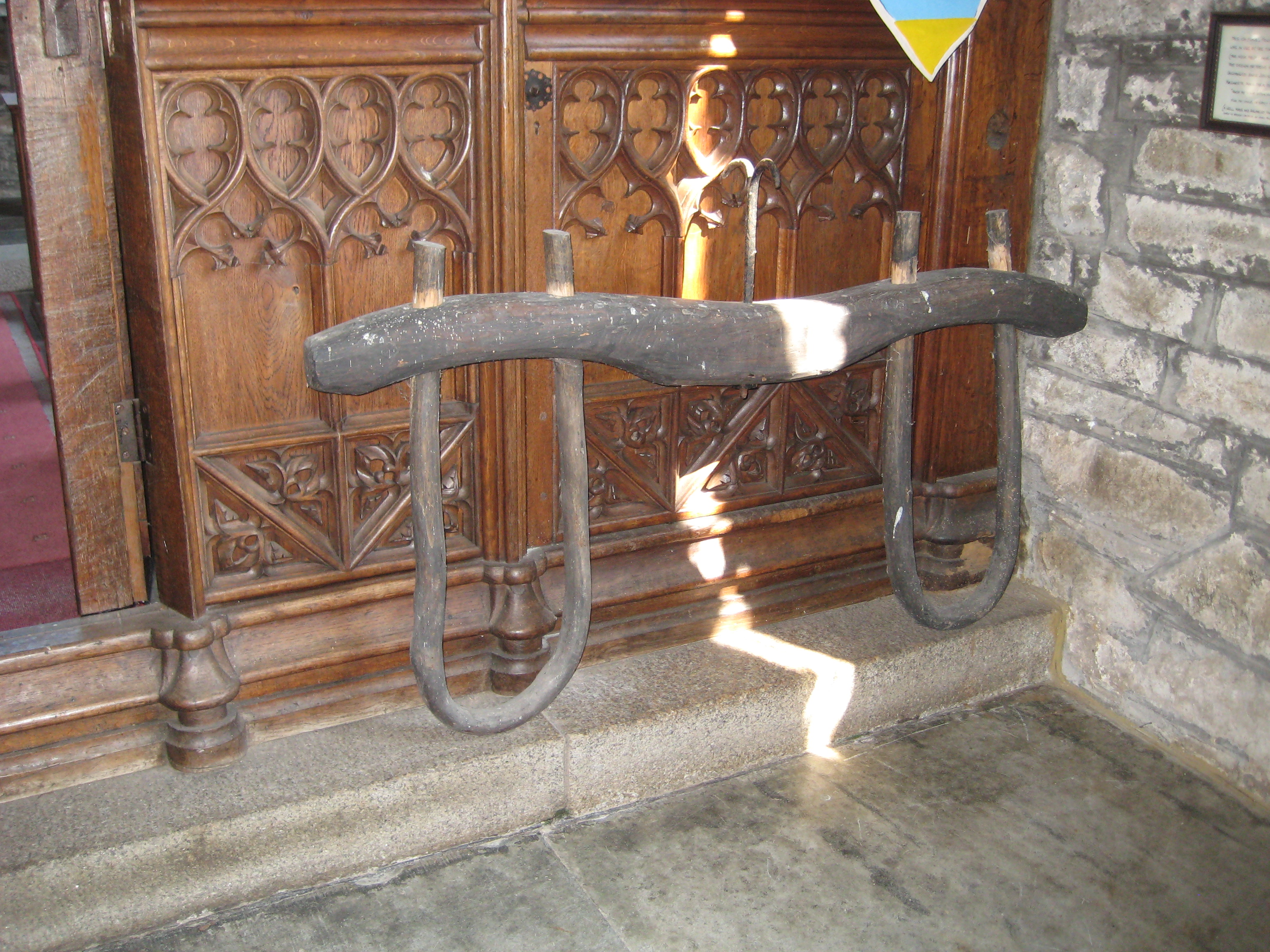
“Come to me, all you who labor and are burdened, and I will give you rest. Take my yoke upon you and learn from me, for I am meek and humble of heart; and you will find rest for yourselves. For my yoke is easy, and my burden light."

-Matthew 11:28-30

Rest. Easy. Light. 

Most of us, myself included, feel tired, burdened, and heavy. 

Whereas I know that I have so many ways in which I can grow in my relationship with Christ, I consider myself one of His disciples. 

But, this rest of which Christ speaks? This ease? This light?

I have so much I still need to learn, and so much growth that still needs to occur.

Ancora imparo...

About 7 years ago, in my sixth year as a principal, I adopted a motto at the beginning of the school year that I hoped would motivate my efforts at the school: all in. I would be all in for Incarnation Catholic School. If we needed a sub, I would step in. A duty to cover? All in. School representation on a committee? Count me in. 

I foolishly thought that the way that I could help push the school to new levels of excellence was through more of me. 

I lasted about 6 weeks before I burnt out. 

Tired. Burdened. Heavy. 

Frustrated and confused, I argued with God, "Why won't you help me carry this? I've poured my entire self into this ministry. Why won't you bless this?"

He replied, "Take my yoke upon you." 

I responded, "I have a yoke, why won't you just help me with mine?"

Christ repeated, "Take my yoke upon you." 

"I don't want that one, I have this one! Help me!" I cried out. 

"That's not for you. Take mine," He lovingly encouraged.

Pridefully, my grip tightened and I turned away.

"Take me. I never asked you to be all in for this school. I need you to be all in for me."

(https://upload.wikimedia.org/wikipedia/commons/a/a9/Wooden_ox_yoke_at_St_Kew_church.jpg)

It was in this moment that I recognized, through the wise counsel of a trusted friend, that I had idolized my ministry. Instead of putting Christ above all else, I put my work as a Catholic school principal ahead of my relationship with Him as well as my primary vocation to my wife and kids. 

Tears streamed down my face. Grateful for this newfound clarity, I begged for the next steps. I was used to my yoke, and for however much I couldn't handle it, it had become comfortable. I didn't know another way. 

"Be all in for Me," Christ commanded. "If that entails, which at times it will, that you devote time and energy and expend yourself for this school, then do it. But, do it for Me. Be all in for Me."

Humbly, I consented. Relieved, I experienced a lightness and ease I hadn't experienced in quite some time. The Sacrament of Reconciliation offered healing, a new beginning, and efficacious grace.  

As a result, my mind raced for ways that I needed to preference my relationship with Jesus and in turn my wife and children. Your vocation is as a husband and father; therefore, stop working in the evenings so that you can be more present to your family. Keep holy the sabbath: stop working all day on Sunday and devote time for your faith and your family. Tithe: give your time, talent, and treasure to your God, and let Him allocate it to your ministry and elsewhere. Recommit to the Eucharist, Reconciliation, and other distinctly Catholic practices, including the Rosary. Bring others into a deeper relationship with Christ through your interactions and your position as a principal. 

Incarnation Catholic School didn't need more of me. Clearly. It needed more of Christ.  

And, much like how Christ gave the beloved disciple - and in turn His Church - His Mother to guide us, protect us, and to bring us into a deeper relationship with her Son, Mother Mary came to me during this same season of my life to help ensure I didn't go running back to my old yoke and so that I could - finally - experience rest... 

Thursday, December 8, 2022

It Is Well

Today marks the 10-year anniversary of my father's sudden passing into eternal life. Unexpected and somewhat mysterious, his death shook me like no other event in my life ever had.

I can't believe he has been gone for 10 years. I have so much that I wish that I could say to him, so much that I wish that I would have done, so many regrets, missed opportunities, and mistakes...

Yet, despite the deep and lasting hole left by my father's passing, I have come to an even deeper understanding of and appreciation for life, my family, and most importantly, my faith. 

It is not, in any way, what I would have chosen. Yet, because of Christ, it is well.   

A few years after his passing, I stumbled across this rendition of the song "It Is Well With My Soul". I knew it as a traditional Christian hymn, yet for as many times as I had heard or even sung it, I never knew its inception. It's incredible to me that in the midst of such tragedy, someone could be so secure in the Lord. 

Horatio Spafford composed the lyrics in the wake of a series of tragic events in his life. He and his wife lost their son to Scarlet Fever in 1870. The Great Chicago Fire of 1871 ruined him financially. Then, he lost his other four children out at sea on a voyage that he was initially supposed to also be on. He learned of their passing from his wife, Anna, who survived the shipwreck and sent Horatio this telegram, "Saved alone. What shall I do?" It was during his journey to reunite with his wife that Spafford wrote the words of this hymn.

Around the same time as my discovery of the origins of the song above, I also heard the testimony of Angie Smith. She retold the story of the birth and death (within two hours of each other) of her daughter Audrey. Her story and her message cut right to my core and I found myself in tears. 

Angie recounted the importance of meeting Jesus in the deep waters of His love as opposed to the safety of the sands on the shore. In her deepest, darkest moments, Angie cried out to Jesus for Him to walk with her, hold her and carry her through these times. 

Jesus, she says, is in the deep. It is only there that we can come to know Him. As you may be able to assume, Angie and her husband, Todd Smith (lead singer of the Christian band, Selah), were advised to abort Audrey as she was incompatible with life. Even if Audrey was able to make it full-term, she would not survive delivery or much beyond. 

Angie and Todd put out into the deep and carried Audrey the full length of the pregnancy. Audrey only lived two hours and the pain surrounding this tragic event shook Angie and Todd and forced them to latch onto the Lord as they had never done before. Todd and Angie had the courage to tell Audrey, "We will carry you," even though her death was imminent and their grief unavoidable. Jesus, in response, had the love to "carry them" through the most difficult thing that anyone could endure - death.

Jesus is not on the shore. He is in the beautiful, powerful, dangerous waters of the deep. When we find ourselves outside of our comfort zones, afraid, hurt, alone, where our feet can't touch the bottom, Jesus is there. He lives in the deep. We can't fall in love with Him on the seashore, because He's not there. We have to move away from what's safe to truly see, meet, and love Jesus. 

By no means does this mean you seek out pain and hurt and despair. Instead, it is an invitation to face life's storms when they come - because they will - with the confidence and courage that we have a Savior who carries us through them all. 

Continue to venture into the deep. It's where, if you're open to it, you can encounter God.

It's where, because of Him, it is well.

Friday, December 2, 2022

It's Not a Career, It's a Calling

Fr. Pedro Ribadeneira, a Jesuit priest, declared to King Phillip II of Spain, "All the well-being of Christianity and of the whole world depends upon the proper education of youth" (O'Malley, 1993, p. 209). I believe that God has called me to strengthen, sustain, and transform Catholic schools to advance Christ’s mission for the Church and upon which the “whole world depends.”  

I believe that God has called me to learn how to make the work of Catholic education and leadership more sustainable, while also discovering ways for our Catholic schools to flourish in their earthly and heavenly goals. 

I believe that God has called me to discover ways in which we can remove boundaries that prevent access to Catholic education to any child or family who desires it: Catholic education should be available to as many children as possible. 

I believe that God has called me to use my zeal to bring others to fullness of life in Jesus Christ through the ministry of Catholic education to more firmly establish His kingdom here on earth and, more importantly, advance it in heaven.  

Because it's not really a career, it's a calling (paraphrased from Tim Ross).

I have devoted my entire professional calling to Catholic education serving as a teacher, coach, athletic director, assistant principal, principal, professor, and associate superintendent. I believe that Catholic schools can change the world. According to the Sacred Congregation for Catholic Education (SCCE), “The Catholic school forms part of the saving mission of the Church, especially for education in the faith” (1977, para. 9). I passionately desire to advance this mission and the curriculum of our schools plays an integral part in doing so. 

The Congregation for Catholic Education (CCE) states, “The Catholic school finds its true justification in the mission of the Church; it is based on an educational philosophy in which faith, culture and life are brought into harmony” (1988, para. 34). This integration of faith, culture, and life occurs through the curriculum, especially religion and/or theology, and other school programs such as retreats, liturgies, service opportunities, and extracurricular activities. Pope Pius XI argued that in order to be worthy of the title Catholic, religion classes should act as the center of Catholic schools and that
it is necessary that all the teaching and the whole organization of the school, and its teachers, syllabus and text-books in every branch, be regulated by the Christian spirit, under the direction and maternal supervision of the Church; so that Religion may be in very truth the foundation and crown of the youth's entire training. (1929, para. 80) 
The Catholic school’s curriculum cannot merely be secular with the addition of religion and/or theology. Instead, the entire educational enterprise within Catholic schools must point to and depend upon Christ, “the foundation of the whole educational enterprise in a Catholic school” (SCCE, 1977, para. 34). 

Catholic schools’ curriculum must promote a distinctly Catholic worldview that acknowledges God’s active presence in our world, and unabashedly Christian anthropology that sees the human person as endowed with inherent dignity and goodness. Our academic and extra-curricular programs must strive toward the "gradual development of every capability of every student" (CCE, 1988, para. 99). Catholic schools imbued with the spirit of Christ must inspire a generation of disciples “who will be ready to take their place in society, preparing them in such a way that they will make the kind of social commitment which will enable them to work for the improvement of social structures, making these structures more conformed to the principles of the Gospel" (SCCE, 1982, para. 19). 

For this to occur, our methods must match the content of the curriculum. Equitable and just grading policies must focus on knowledge and skills; disciplinary systems must be formative and relational. Voice must be given to historically marginalized groups; schools must provide windows and mirrors in both programming and personnel in order for students to value other cultures while also seeing themselves represented in the school. 

Because in the end, we are preparing students for their calling, which might require them to thrive in many various tasks. 

May our Catholic schools bring students wisdom to recognize the voice of God, courage to say yes to it, and strength to faithfully fulfill the requirements of this call. 

May we prepare our students for college, career, and calling readiness. 


References
Congregation for Catholic Education. (1988). The Religious Dimension of Education in a 
Catholic School: Guidelines for Reflection and Renewal. https://bit.ly/2NKgCyL 

O'Malley, J. (1993). The First Jesuits. Harvard University Press.  

Pope Pius XI. (1929, December 31). Divini Illius Magistri. 

Sacred Congregation for Catholic Education. (1977). The Catholic School.

Sacred Congregation for Catholic Education. (1982). Lay Catholics in Schools: Witnesses to 
faith.


Wednesday, November 23, 2022

The Mission and Identity of a Catholic School

The Mission

The mission of Catholic education stems from the great commission of Christ given to His disciples before His Ascension: “Go, therefore, and make disciples of all nations, baptizing them in the name of the Father, and of the Son, and of the holy Spirit, teaching them to observe all that I have commanded you. And behold, I am with you always, until the end of the age” (Mt. 28:19-20). The Sacred Congregation for Catholic Education affirms this as the focus of the efforts of our schools, stating, “Evangelisation is, therefore, the mission of the Church; that is she must proclaim the good news of salvation to all, generate new creatures in Christ through Baptism, and train them to live knowingly as children of God” (1977, para. 7). In order to accomplish this noble purpose, our Church “establishes her own schools because she considers them as a privileged means of promoting the formation of the whole (person), since the school is a centre in which a specific concept of the world, of (humanity), and of history is developed and conveyed” (Sacred Congregation for Catholic Education, 1977, para. 8).

Separate and distinct from other ministries of the Church, the Catholic school’s “proper function is to create for the school community a special atmosphere animated by the Gospel spirit of freedom and charity, to help youth grow according to the new creatures they were made through baptism as they develop their own personalities, and finally to order the whole of human culture to the news of salvation so that the knowledge the students gradually acquire of the world, life and (humanity) is illumined by faith” (Second Vatican Council, 1965, para. 8). 

In short, our Catholic schools must make scholars and saints, bringing people to fullness of life through the development of all of their capacities and a relationship with Jesus Christ. 

Establish the Kingdom of God here on earth and advance its membership in heaven. 

Educate the heart and the mind. 

Make disciples. 

"Jesus and His Disciples at the Last Supper" by Martin LaBar is licensed under CC BY-NC 2.0.
"Jesus and His Disciples at the Last Supper" by Martin LaBar is licensed under CC BY-NC 2.0.

The Identity

Theories about organizational culture posit that effective cultures have a clearly defined, known, and lived statement of purpose. Coyle (2018) cites establishing purpose as one of the three most important components of a strong organizational culture. Senge (1990) states, “Few acts of leadership have a more enduring impact on an organization than building a foundation of purpose and core values” (p. 10). For organizations within the Catholic Church, this purpose must reflect the mission of Christ mentioned above and our values must find their rootedness in the core tenets of our faith such as the Incarnation, the Trinity, the Eucharist, and the Paschal Mystery. The Sacred Congregation for Catholic Education declares that our distinctly Catholic purpose and core values must be shared across the school community, “It is, therefore, essential, if for no other reason than for a unity in teaching, that each member of the school community, albeit with differing degrees of awareness, adopts a common vision, a common outlook on life, based on adherence to a scale of values in which (he or she) believes” (1977, para. 29).

The Congregation for Catholic Education stated that “(t)he Catholic school finds its true justification in the mission of the Church; it is based on an educational philosophy in which faith, culture and life are brought into harmony” (1988, para. 34). Within Catholic schools, this integral synthesis of faith, culture, and life occurs through the curriculum, especially religion and/or theology, and other school programs such as retreats, liturgies, service opportunities, and other extracurricular activities. Pope Pius XI, in his 1929 encyclical Divini Illius Magistri, argued that in order to be worthy of the title Catholic, religion classes should act as the central focus of Catholic schools and that “it is necessary that all the teaching and the whole organization of the school, and its teachers, syllabus and text-books in every branch, be regulated by the Christian spirit, under the direction and maternal supervision of the Church; so that Religion may be in very truth the foundation and crown of the youth's entire training” (para. 80).

Ministers of Catholic Education

In addition to the important role played by the curriculum in use, teachers play a critical part in whether or not a Catholic school achieves its purpose. The Second Vatican Council explained that teachers fulfill an essential function in the Catholic school’s advancement of Christ’s mission, writing, “But let teachers recognize that the Catholic school depends upon them almost entirely for the accomplishment of its goals and programs…Intimately linked in charity to one another and to their students and endowed with an apostolic spirit, may teachers by their life as much as by their instruction bear witness to Christ, the unique Teacher” (1965, para. 8). Historically, religious women served as the teachers and administrators of Catholic schools. However, given the increasing number of laity serving as Catholic educators, teachers must clearly understand their connection to the Church. “Lay teachers must be profoundly convinced that they share in the sanctifying, and therefore educational mission of the Church; they cannot regard themselves as cut off from the ecclesial complex” (Sacred Congregation for Catholic Education, 1982, para. 24). Furthermore, Catholic school teachers must recognize that they form “in the real sense of the word an apostolate most suited to and necessary for our times and at once a true service offered to society” (Second Vatican Council, 1965, para. 8). 

Catholic school teachers must understand that they, like the apostles, have been sent out on mission by Christ.

Permanent, Integral Formation

Because of this vocational call to education in the faith, teachers in Catholic schools must commit to ongoing formation. The Second Vatican Council encourages teachers to “be very carefully prepared so that both in secular and religious knowledge they are equipped with suitable qualifications and also with a pedagogical skill that is in keeping with the findings of the contemporary world” (1965, para. 8). The Sacred Congregation for Catholic Education concurs, “(Since) the need for updating is constant, then the formation must be permanent. This need is not limited to professional formation; it includes religious formation and, in general, the enrichment of the whole person. In this way, the Church will constantly adapt its pastoral mission to the circumstances of the men and women of each age, so that the message of Jesus Christ can be brought to them in a way that is understandable and adapted to their condition” (Sacred Congregation for Catholic Education, 1982, para. 68).  

Schools also need tools in order to evaluate their programming as it pertains to mission and Catholic identity. All members of the community should participate in this evaluative process, “A willingness to collaborate helps to facilitate decisions that need to be made about the ways to achieve these goals and, while preserving proper respect for school authorities, even makes it possible to conduct a critical evaluation of the school - a process in which teachers, students and families can all take part because of their common concern to work for the good of all” (Congregation for Catholic Education, 1988, para. 39).

Catholic schools will advance Christ’s mission if those serving in the apostolate of Catholic education have “a clear vision of the Christian milieu”, live “in accord with it” and “help young people develop a similar vision” (Congregation for Catholic Education, 1988, para. 96). No program, policy, or procedure can form disciples without authentic people of faith executing them. Disciples create disciples. The formation of Catholic school teachers, therefore, serves as an essential step toward advancing the mission of Catholic schools. From Lay Catholics in Schools: Witnesses to faith (Sacred Congregation for Catholic Education, 1982, para. 72): 

This humble faith (of the Catholic school teacher), this hope, and this charity are supported by the Church through the Word, the life of the Sacraments, and the prayer of the entire People of God.  
For the Word will speak to educators, and remind them of the tremendous greatness of their identity and of their task; Sacramental life will give them the strength they need to live this career, and bring support when they fail; the prayer of the whole Church will present to God, with them and for them, with the assured response that Jesus Christ has promised, all that the human heart desires and pleads for, and even the things that it does not dare to desire or plead for.

In addition to a personal life of faith, Catholic school teachers must find support for their spiritual development from their schools, parishes/churches and diocesan offices.   

Study, Prayer, and Service

The entire educational endeavor within Catholic schools strives to form scholars and saints. The Sacred Congregation for Catholic Education offers details about this worthwhile pursuit,

The vocation of every Catholic educator includes the work of ongoing social development: to form men and women who will be ready to take their place in society, preparing them in such a way that they will make the kind of social commitment which will enable them to work for the improvement of social structures, making these structures more conformed to the principles of the Gospel. Thus, they will form human beings who will make human society more peaceful, fraternal, and communitarian. (1982, para. 19)

In order to form disciples of Christ committed to using their gifts and talents to build the Kingdom of God here on earth, Catholic schools must “continually be fed and stimulated by its Source of life, the Saving Word of Christ as it is expressed in Sacred Scripture, in Tradition, especially liturgical and sacramental tradition, and in the lives of people, past and present, who bear witness to that Word” (Sacred Congregation for Catholic Education, 1977, para. 54). As such, Catholic schools must embrace the reading and study of Sacred Scripture, the celebration of the sacraments of the Eucharist and Reconciliation, participation in liturgical programming, and opportunities to engage in service to others. 

Hearts of Apostles

“Beyond question the vision of the (fourfold) educational ministry presented here (message, community, service, worship) is an ambitious one. Were it of human origin, one might well despair of its attainment. But since it represents God's plan, it must be energetically pursued" (National Conference of Catholic Bishops, 1972, para. 31). The work of the Catholic school has eternal ramifications; cooperation with grace and each other comprise essential ingredients for its success. 

As Catholic schools envision innovative models and approaches to insure the vitality and sustainability of their efforts, we must also hold fast to the core purpose of our work. "And so, now as in the past, the Catholic school must be able to speak for itself effectively and convincingly. It is not merely a question of adaptation, but of missionary thrust, the fundamental duty to evangelize, to go towards men and women wherever they are, so that they may receive the gift of salvation" (Congregation for Catholic Education, 1997, para. 3). 

Given the magnitude of our mission, there can be nothing little about us. We must have the hearts - and identity - of apostles (paraphrased from a quote by St. Julie Billiart). 


Nheyob, CC BY-SA 4.0, https://creativecommons.org/licenses/by-sa/4.0, via Wikimedia Commons


References
Congregation for Catholic Education. (1988, April 7). The Religious Dimension of Education in a Catholic School: Guidelines for reflection and renewal. Retrieved from https://www.vatican.va/roman_curia/congregations/ccatheduc/documents/rc_con_ccatheduc_doc_19880407_catholic-school_en.html  

Congregation for Catholic Education. (1997, December 28). The Catholic School on the Threshold of the Third Millennium. Retrieved from https://www.vatican.va/roman_curia/congregations/ccatheduc/documents/rc_con_ccatheduc_doc_27041998_school2000_en.html 

Coyle, D. (2018). The culture code: The secrets of highly successful groups. New York: Bantam Books. 

National Conference of Catholic Bishops. (1972, November). To Teach As Jesus Did: A pastoral message on Catholic education. Retrieved from https://curate.nd.edu/downloads/xd07gq70w5z 

Pope Pius XI. (1929, December 31). Divini Illius Magistri. Retrieved from https://www.vatican.va/content/pius-xi/en/encyclicals/documents/hf_p-xi_enc_31121929_divini-illius-magistri.html

Sacred Congregation for Catholic Education. (1977, March 19). The Catholic School. Retrieved from https://www.vatican.va/roman_curia/congregations/ccatheduc/documents/rc_con_ccatheduc_doc_19770319_catholic-school_en.html 

Sacred Congregation for Catholic Education. (1982, October 15). Lay Catholics in Schools: Witnesses to faith. Retrieved from https://www.vatican.va/roman_curia/congregations/ccatheduc/documents/rc_con_ccatheduc_doc_19821015_lay-catholics_en.html

Senge, P. M. (1990). The Leader's New Work: Building Leading Organization. Sloan Management Review, 32(9).

Vatican Council II. (1965, October 28). Gravissimum Educationis. Retrieved from http://www.vatican.va/archive/hist_councils/ii_vatican_council/documents/vat-ii_decl_19651028_gravissimum-educationis_en.html